Session one - 'Dressed to kill'
Notes taken during lecture

|

|
|
Assigned readings
|
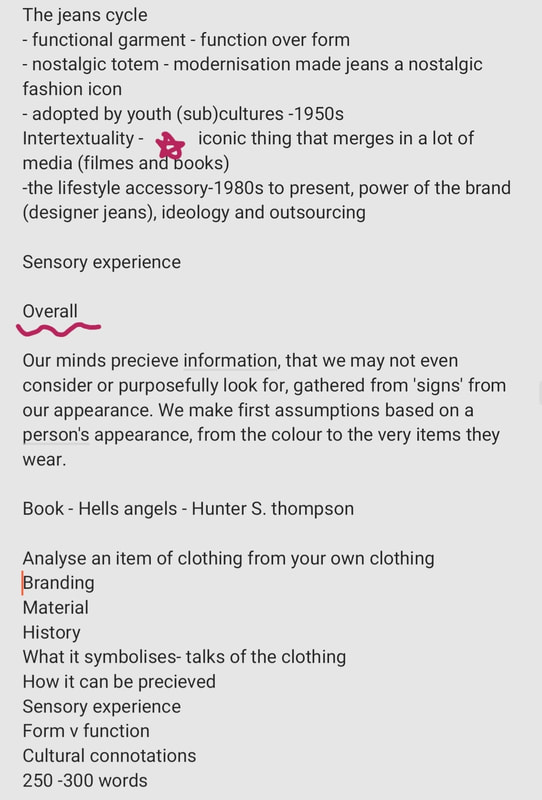
This extract of Beverly Gordon's "American Denim: Blue Jeans and Their Multiple Layers of Meaning" examines the transformation of blue jeans from practical workwear to multifaceted cultural symbols in American society. Initially designed for laborers, jeans evolved into icons of rebellion, freedom, and personal identity. Artists and intellectuals adopted them as "anti-fashion" statements, while the fashion industry later embraced and commercialized them. Gordon's analysis highlights how blue jeans have continually adapted, embodying diverse and evolving cultural meanings throughout American history
|
|
Session one research blog
|
Branding and intro -
From my wardrobe I chose to analyse one of my most worn articles of clothing, a grey checked over coat of which I got from Primark. Material and sensory - To me, the purchase was obvious. The brand and thick material are both very reliable and have done its job well. It’s comforting and protective, both metaphorically and literal, I have found that it physically impacts how I perceive and hold myself when its worn, instinctually I find I hold myself up much more proper no matter if I have dressed it up or down. For v function - In terms of form or function, there is significant examples for both. Primarily, worn to protect your body from the weather they act as almost blankets protecting not only your torso but a portion of your legs. In numerous countries, coats and gowns extending below the knee have been utilised for millennia, frequently for ceremonial occasions, signifying social standing or serving as components of professional or military attire. |

|
Symbolism -
There are many meanings that could be taken from the design of the coat, from the colour to the pattern. Grey and black together typically represent sophistication, seriousness, and a desire to appear conservative or understated, as grey represents neutrality and moderation, whereas black is often associated with power, elegance, and mystery; when combined, they can convey a polished, somewhat formal look. On the other hand, choosing grey and black can signal a desire to avoid bringing too much attention to oneself and instead project a more subtle presence. Wearing a checked coat can generally represent a classic, timeless style with a touch of casualness, often associated with a preppy or traditional aesthetic, depending on the specific check pattern and colour combination; it can also sometimes indicate a connection to a specific cultural or regional identity, such as tartan in Scotland. It’s long enough so it feels like its disguising any of my insecurities from outsiders, a personal barrier against judgement.

Overcoats worn by Dandies in the Regency Period
|
History -
In the seventeenth century, the overcoat became widely fashionable and accessible to all classes. Overcoats have long had a consistent appearance in the Western world. During the Regency period, the fashion was to wear very form-fitting clothing with side bodies, waist seams, and a flared skirt. Examples of these are the frock overcoat and paletot. In the 17th century, overcoats became widely accessible to a variety of social classes. The most common style of overcoat in the 19th century was the frock, overcoats gained popularity in men's fashion. The frock coat was swapped out for the Chesterfield coat. During World War I, full-length overcoats were an essential component of troops' gear. The Crombie coat was adopted by punk subcultures in the 1970s, which experimented with gender-neutral fashion. As part of the power dressing movement in the 1980s, overcoats gained popularity and are still a winter wardrobe must today. |
|
Whilst researching I came across some helpful resources, one of these was this YouTube video explaining the basics on semiotics
|
|
Session two - 'The Image of passion'
|
|
Notes taken during session

|
|
|
|
|
Assigned reading
|
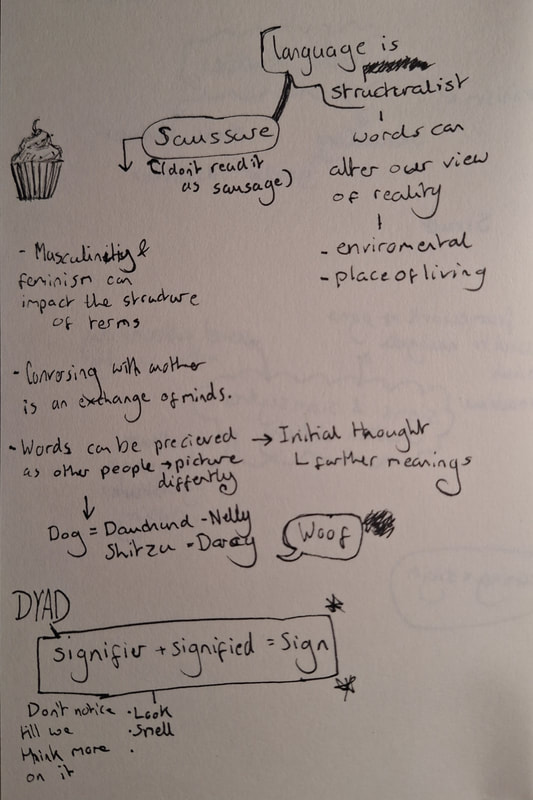
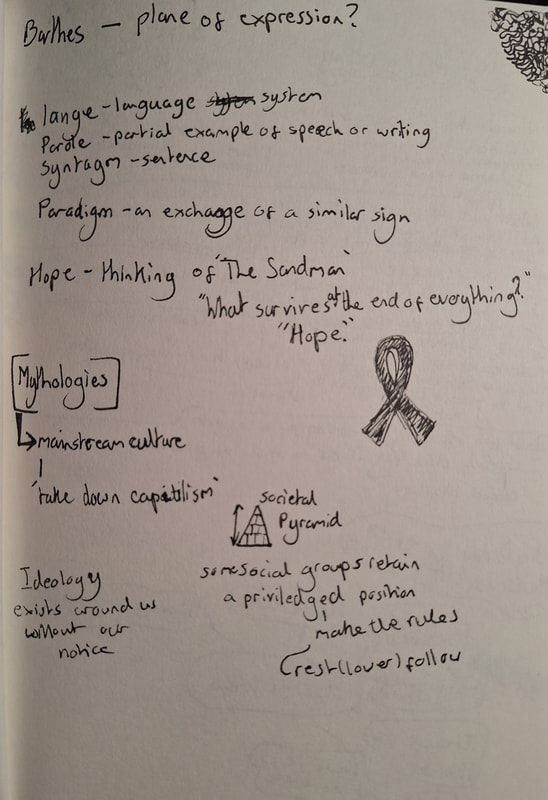
In the first chapter of "Media Semiotics: An Introduction," Jonathan Bignell introduces semiotics as the study of signs and their meanings within media texts. He explains that signs consist of a signifier (the form) and the signified (the concept), and their relationship constructs meaning. Bignell also discusses how media perpetuates cultural myths, shaping societal ideologies and values. This foundational chapter equips readers with tools to analyse how media messages convey and reinforce cultural meanings.
|
|
|
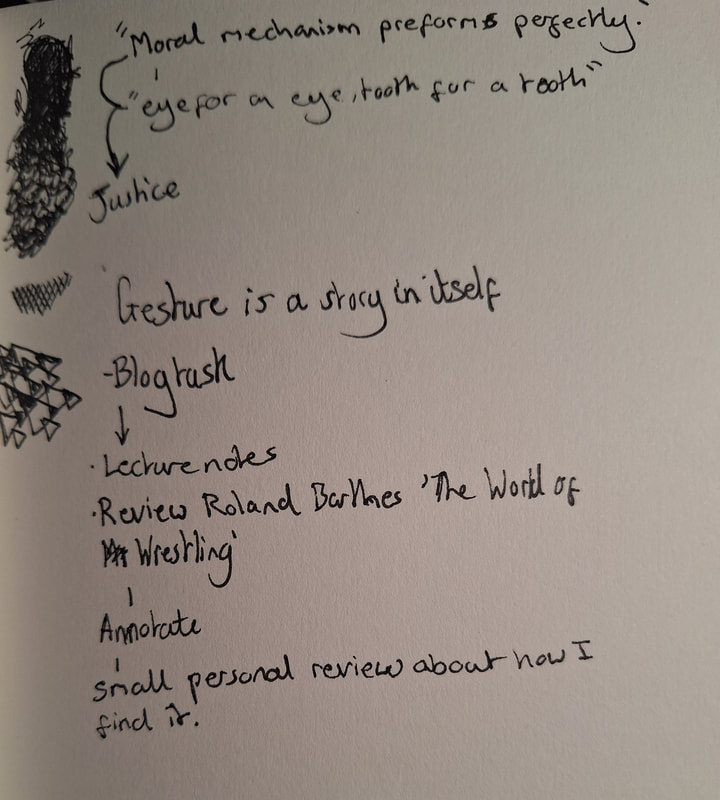
I researching the topic further and found some helpful videos focusing on Roland Barthes 'The World of Wrestling', one being an introduction and the other being an analysis of the article itself.
|
|
|
session two research blog
In order to create a thorough review I needed a a summary from which I could base my work from and so I went to ChatGPT and asked it to create one for me. Here is the result.
Summary of The World of Wrestling by Roland Barthes
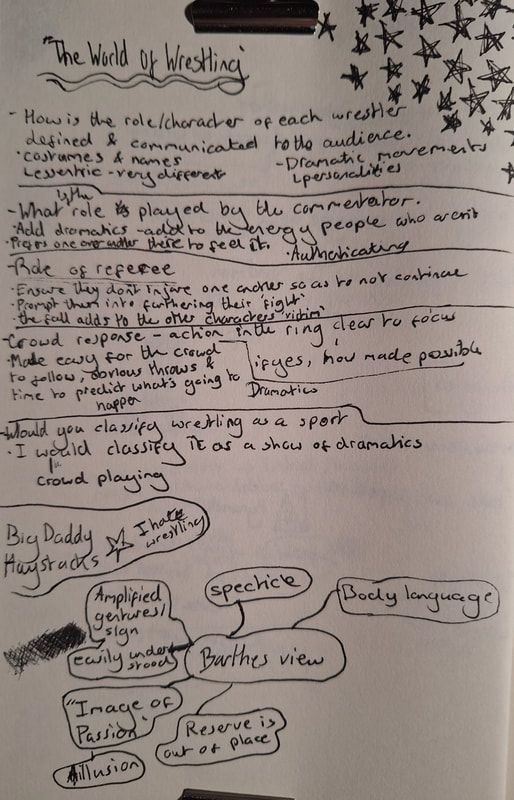
Roland Barthes’ essay The World of Wrestling, from Mythologies, presents professional wrestling as a theatrical spectacle rather than a sport. He argues that wrestling is not about competition but about the exaggerated display of emotions, where every action is symbolic and meant to be instantly understood by the audience. Barthes compares wrestling to classical theater, highlighting its emphasis on moral justice, where villains ("bastards") are always punished, and heroes emerge victorious in a dramatic, almost ritualistic manner.
He contrasts wrestling with boxing, explaining that while boxing builds suspense over time, wrestling is about the immediacy of each moment, emphasizing clear-cut moral narratives. The audience does not seek unpredictability or authenticity but instead enjoys the fulfillment of expected roles and exaggerated gestures of suffering, defeat, and retribution. Wrestling, in Barthes' view, serves as a modern mythological performance, offering spectators a sense of clarity and justice that reality often lacks.
Roland Barthes’ essay The World of Wrestling, from Mythologies, presents professional wrestling as a theatrical spectacle rather than a sport. He argues that wrestling is not about competition but about the exaggerated display of emotions, where every action is symbolic and meant to be instantly understood by the audience. Barthes compares wrestling to classical theater, highlighting its emphasis on moral justice, where villains ("bastards") are always punished, and heroes emerge victorious in a dramatic, almost ritualistic manner.
He contrasts wrestling with boxing, explaining that while boxing builds suspense over time, wrestling is about the immediacy of each moment, emphasizing clear-cut moral narratives. The audience does not seek unpredictability or authenticity but instead enjoys the fulfillment of expected roles and exaggerated gestures of suffering, defeat, and retribution. Wrestling, in Barthes' view, serves as a modern mythological performance, offering spectators a sense of clarity and justice that reality often lacks.
My own review
|
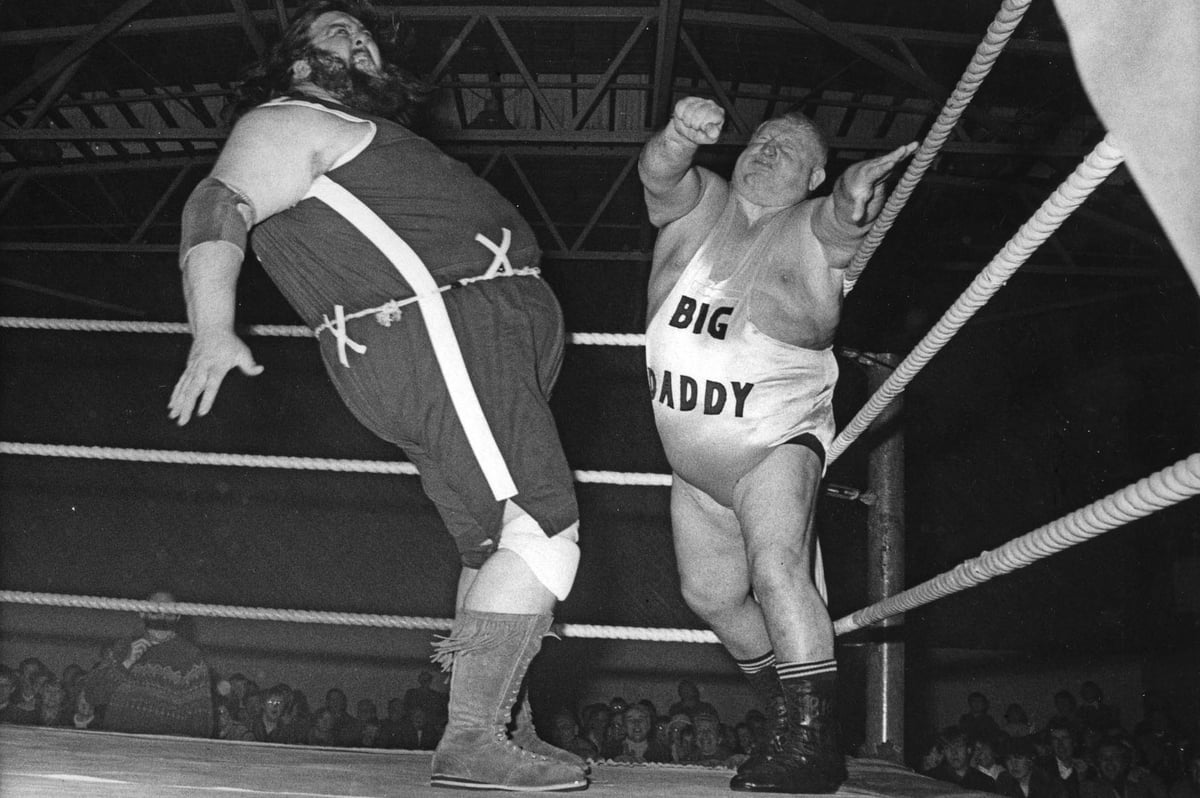
‘The World of Wrestling’ by Roland Barthes is a constructed analysis on the semiotics and theatrical ‘sport’ that is wrestling, he examines the larger mechanisms of signification that is the body language and the response of the crowd. He specifies how wrestling works through a ‘system of signs’, through each gesture, movement, and how the result has a clear and immediate significance. He contends that wrestling is less of a sport but a theatrical extravaganza that acts on the moral lessons the viewers have in their minds.
The notion that wrestling is a system of signs rather than a contest of skill is a core of Barthes’ semiotic analysis. It plays on the role of the triumph of the hero and the deceit of the villain, the overexaggerated movements portray the suffering of the vanquished and serves as a visual and performative signifier that conveys a predefined message decided before the match. Not unlike the reading of classical drama, the audience (or viewer in terms of literature) reads and interprets a structured set of indicators rather than merely guessing what will happen. |
|
In conclusion, Barthes’ ability to diagnose the underlying meaning in the actions he witnessed has led him to determine that wrestling is well planned and thought through language of legendary tale in which each signal has been played for the audience to enjoy the dramatic tale the players are showing, therefore making more of a show.
In order to understand further the semiotics used throughout I also wanted to compare my own review with one written solemnly by ChatGPT.
Review of The World of Wrestling by Roland BarthesRoland Barthes’ The World of Wrestling, from Mythologies, is a brilliant and thought-provoking analysis of professional wrestling as a cultural spectacle rather than a sport. Barthes dissects the exaggerated performances, grand gestures, and moral symbolism embedded in wrestling, likening it to classical theater and ancient rituals. His perspective transforms what many see as lowbrow entertainment into a highly structured and meaningful form of storytelling.
One of Barthes’ strongest arguments is that wrestling functions as a performance of morality, where good and evil are clearly defined, and justice is always served. Unlike sports that rely on unpredictability and genuine competition, wrestling thrives on predetermined narratives that deliver emotional satisfaction to the audience. The villains—the "bastards"—are punished, and the heroes triumph in a manner that mirrors classical tragedies. His comparison of wrestling to Greek drama and Commedia dell’arte is particularly compelling, as it highlights how audiences engage with larger-than-life archetypes rather than individual athletes.
Barthes also emphasizes wrestling’s theatricality, describing how every gesture is amplified for maximum clarity. The exaggerated suffering of a defeated wrestler, the dramatic outbursts of rage, and the predictable moments of betrayal and redemption all serve as visual metaphors that are instantly recognizable to the audience. In this sense, wrestling is not about winning or losing but about embodying an emotion or moral lesson through performance.
However, while Barthes’ analysis is insightful, it may over-intellectualize a spectacle that, for many viewers, is simply about entertainment. He focuses heavily on wrestling’s symbolic and theatrical elements but does not fully consider its economic and social dimensions—such as its appeal across different demographics or its function as an industry. Additionally, while he argues that the audience is not concerned with whether wrestling is "real" or not, he does not explore how this perception has evolved, especially in modern wrestling where fans are often aware of its scripted nature but still engage with it emotionally.
Despite these minor limitations, The World of Wrestling is a masterful piece of cultural criticism. Barthes takes a seemingly trivial subject and reveals its deeper significance, demonstrating his skill as a semiotician. His essay remains relevant today, as professional wrestling continues to blend spectacle, storytelling, and athleticism in ways that captivate audiences worldwide. Whether or not one is a wrestling fan, Barthes’ analysis offers a fascinating lens through which to view not just wrestling but the broader world of popular culture and performance.
One of Barthes’ strongest arguments is that wrestling functions as a performance of morality, where good and evil are clearly defined, and justice is always served. Unlike sports that rely on unpredictability and genuine competition, wrestling thrives on predetermined narratives that deliver emotional satisfaction to the audience. The villains—the "bastards"—are punished, and the heroes triumph in a manner that mirrors classical tragedies. His comparison of wrestling to Greek drama and Commedia dell’arte is particularly compelling, as it highlights how audiences engage with larger-than-life archetypes rather than individual athletes.
Barthes also emphasizes wrestling’s theatricality, describing how every gesture is amplified for maximum clarity. The exaggerated suffering of a defeated wrestler, the dramatic outbursts of rage, and the predictable moments of betrayal and redemption all serve as visual metaphors that are instantly recognizable to the audience. In this sense, wrestling is not about winning or losing but about embodying an emotion or moral lesson through performance.
However, while Barthes’ analysis is insightful, it may over-intellectualize a spectacle that, for many viewers, is simply about entertainment. He focuses heavily on wrestling’s symbolic and theatrical elements but does not fully consider its economic and social dimensions—such as its appeal across different demographics or its function as an industry. Additionally, while he argues that the audience is not concerned with whether wrestling is "real" or not, he does not explore how this perception has evolved, especially in modern wrestling where fans are often aware of its scripted nature but still engage with it emotionally.
Despite these minor limitations, The World of Wrestling is a masterful piece of cultural criticism. Barthes takes a seemingly trivial subject and reveals its deeper significance, demonstrating his skill as a semiotician. His essay remains relevant today, as professional wrestling continues to blend spectacle, storytelling, and athleticism in ways that captivate audiences worldwide. Whether or not one is a wrestling fan, Barthes’ analysis offers a fascinating lens through which to view not just wrestling but the broader world of popular culture and performance.
Comparison of the two
There are similar points between the two, for example the highlights how wrestling differs from traditional sports in that it depends more on symbolic performances than on chance and how the exaggerated movements and reactions help structure the story and foreshadow the results and roles of the players.
A difference I have picked up on is that the ChatGPT review does critique Barthes' perspective on the limitations of his argument, such as the lack of consideration for economic and social factors or the evolution of audience perceptions over time.
A difference I have picked up on is that the ChatGPT review does critique Barthes' perspective on the limitations of his argument, such as the lack of consideration for economic and social factors or the evolution of audience perceptions over time.
session three - 'words and images'
Notes taken during session

|
|

|

|
|
Assigned reading
|
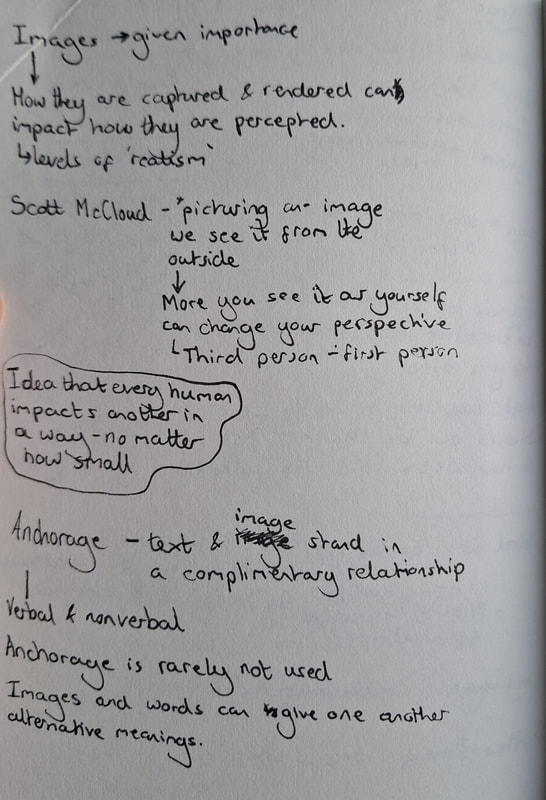
Roland Barthes' The Photographic Message explores the complex relationship between photography and meaning, emphasizing that photographs are not neutral representations of reality but are instead shaped by cultural codes and interpretations. He distinguishes between the denotative (literal) and connotative (symbolic) meanings of an image, arguing that while a photograph appears objective, it is always influenced by context, framing, and accompanying text. Barthes also examines how press photographs, in particular, construct narratives by combining image and caption, guiding the viewer’s interpretation. Through this analysis, he highlights how photography, despite its claim to truth, is always subject to manipulation and ideological framing, making it a powerful tool in media and communication.
|
|
|
|
In Making Comics, Scott McCloud provides an in-depth exploration of the art and craft of comic creation. He delves into the mechanics of storytelling, offering insights into effective framing, writing, and illustration techniques. McCloud emphasizes the importance of conveying emotions through detailed facial expressions and body language, providing practical advice on how to depict specific feelings. He also examines various comic formats, including manga, graphic novels, daily strips, and single-panel cartoons, highlighting their unique characteristics and storytelling methods. Throughout the book, McCloud includes exercises designed to enhance specific skills, making it a valuable resource for both aspiring and seasoned comic creators.
|
session four research blog
|
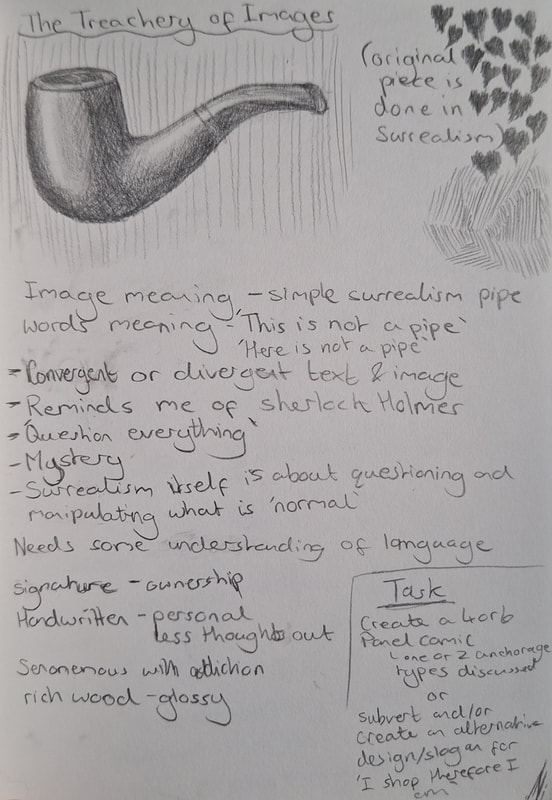
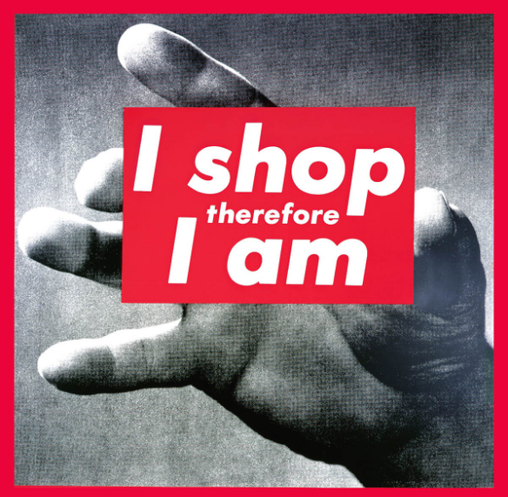
Barbara Kruger's 'I shop, Therefore I am' advertisement challenges the connection to materialism using stunning visual aesthetic and assertive words. By replacing the act of thinking with the act of shopping, she repurposes the famous Cartesian saying "I think, Therefore I am", this manipulating the saying to suit more modern culture, our identities are increasingly defined by the object we purchase. This message is kept front and centre in this minimalist, almost cynical style, which eliminated any unnecessary details.
|
|
My own take based on Barbara Kruger
Version one

|

|
Version 2
|
|
Version 3

|
|
Version 4
|
Analysis of my pieces
|
In this piece, instead of critiquing consumerism, my work explores identity through fashion and self-expression. The phrase “I WEAR, THEREFORE I AM” challenges the idea that what we wear defines who we are, questioning whether clothing and accessories shape identity or merely reflect it. The subject, confidently wearing headphones and styled in a striking, modern aesthetic, reinforces this tension between individuality and societal influence. Like Kruger’s work, my piece invites the viewer to consider the relationship between personal choice, self-image, and external perception.
|
|
|
|
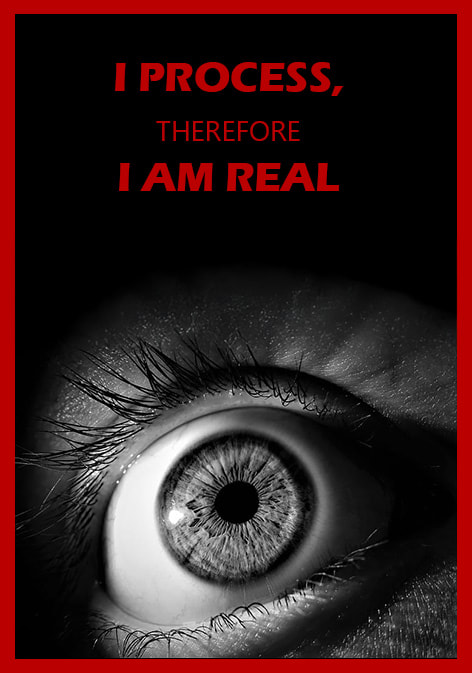
In my piece, I’ve shifted the theme from her original focus on consumer identity to the concept of “processing” as a measure of existence. I placed a large, intensely focused eye at the centre to echo Kruger’s direct engagement with the viewer, emphasizing how perception and cognition underlie our sense of self. By juxtaposing the human eye, symbolizing awareness, with the statement “I PROCESS, THEREFORE I AM REAL,” I’m suggesting that our internal act of processing—rather than external behaviours like shopping, ultimately validates our reality.
|
|
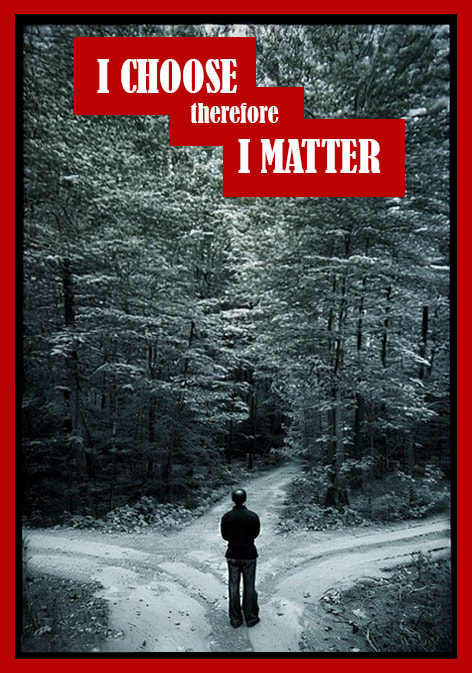
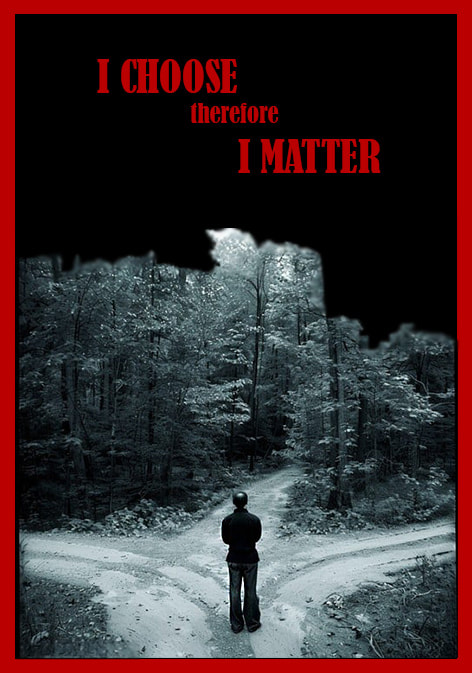
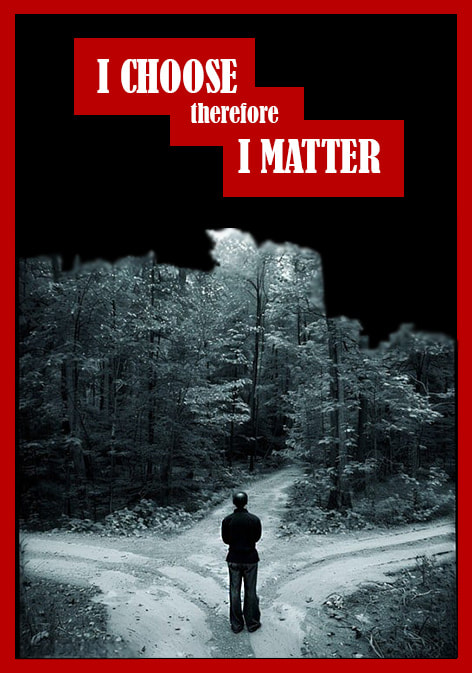
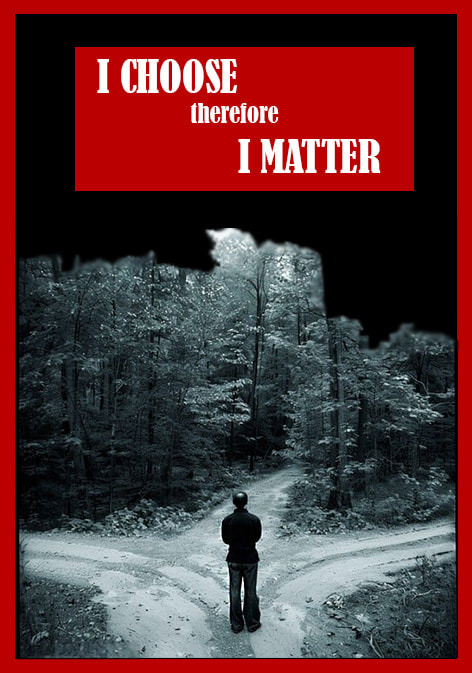
In this piece, I used the succinct text to confront viewers with a direct statement, this time focusing on personal agency rather than consumer identity. The figure standing at a literal crossroads symbolizes the power of choice: each path represents a different direction, reinforcing the idea that our decisions define our sense of self. By pairing the words “I CHOOSE therefore I MATTER” with a stark, minimal design, I aim to highlight the tension between introspection and action. Like Kruger’s work, my piece challenges the audience to question how we construct our identities, here, not through what we buy, but through the choices we make.
|
|
|
|
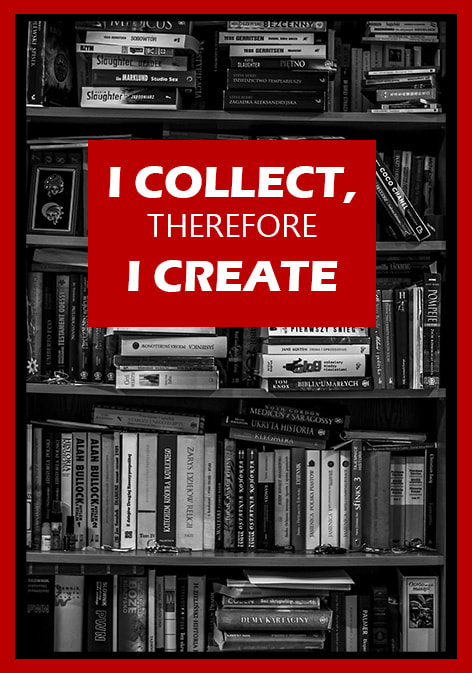
This piece uses the phase "I Collect, Therefore I Create," that while Kruger's work critiques consumerism and identity, my reinterpretation shifts the focus to the relationship between collecting and creativity. The background, a black-and-white image of a bookshelf filled with books,symbolizes the raw material of knowledge, inspiration, and artistic influence. The bold red text box, echoing Kruger's signature style, asserts the idea that the act of collecting (books, ideas, experiences) is not passive but generative. Instead of consumption defining existence, my piece suggests that accumulation fuels creation, making it an essential part of the artistic process.
|
session four - decoding advertisment
Notes taken during lesson
|
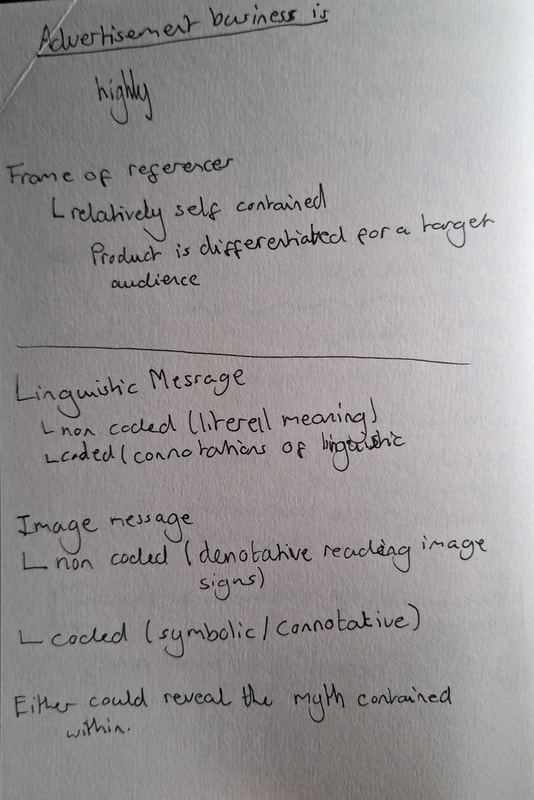
|
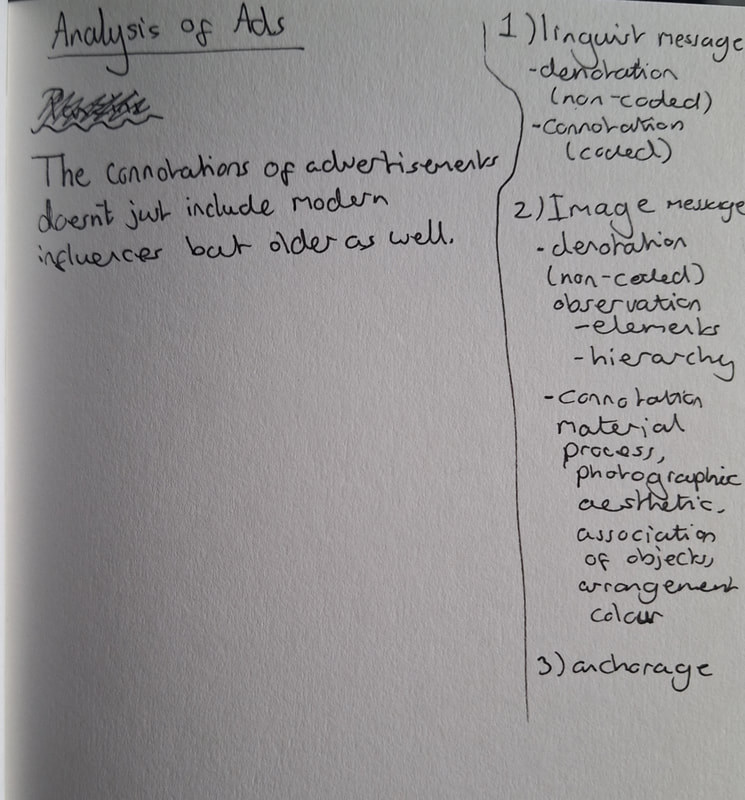
|
Assigned readings
|
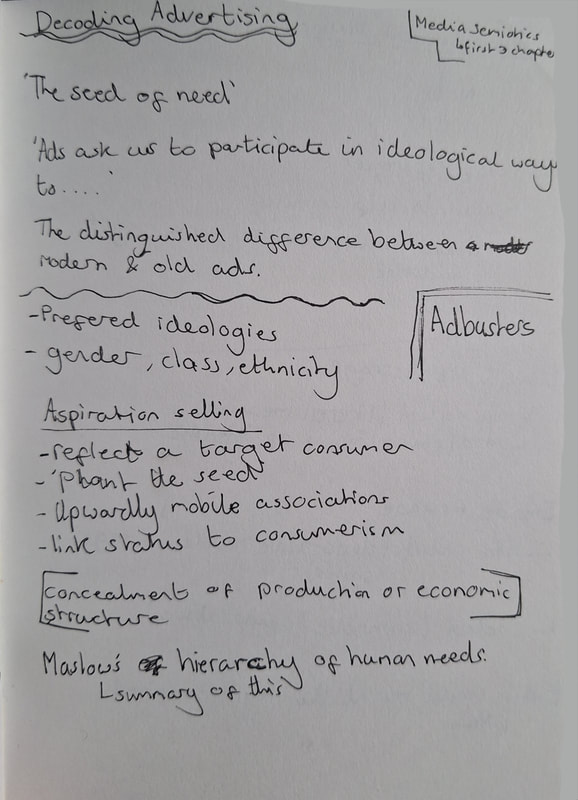
In Chapter 2 of "Media Semiotics: An Introduction," Jonathan Bignell delves into the semiotic analysis of advertisements, exploring how they construct meaning and convey ideological messages. He examines the role of signs and symbols in advertising, discussing how they are used to create associations and influence consumer perceptions. Bignell also addresses the ideological functions of advertisements, analysing how they reinforce societal norms and values. Through detailed case studies, he demonstrates the application of semiotic theory to real-world advertising examples, providing readers with tools to critically assess the media they encounter.
|
|
|
|
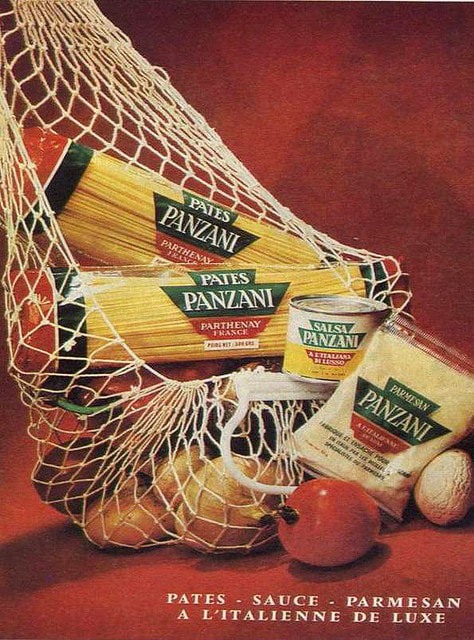
In "Rhetoric of the Image," Roland Barthes examines how images convey meaning, using a Panzani pasta advertisement as a case study. He identifies three layers of messages within the image: the linguistic message, encompassing textual elements like the brand name "Panzani," which evokes "Italianicity"; the denoted (literal) message, depicting a half-open shopping bag with pasta and fresh ingredients, suggesting a recent market visit; and the connoted (symbolic) message, where the arrangement implies quality, authenticity, and a Mediterranean lifestyle. Barthes also discusses the functions of the linguistic message: anchorage, where text directs the viewer's interpretation, and relay, where text and image collaborate to convey a message neither could alone. This analysis demonstrates that images carry multiple layers of meaning shaped by cultural and contextual factors, providing a framework for deconstructing visual content to understand complex messages beyond their literal appearances.
|
In session
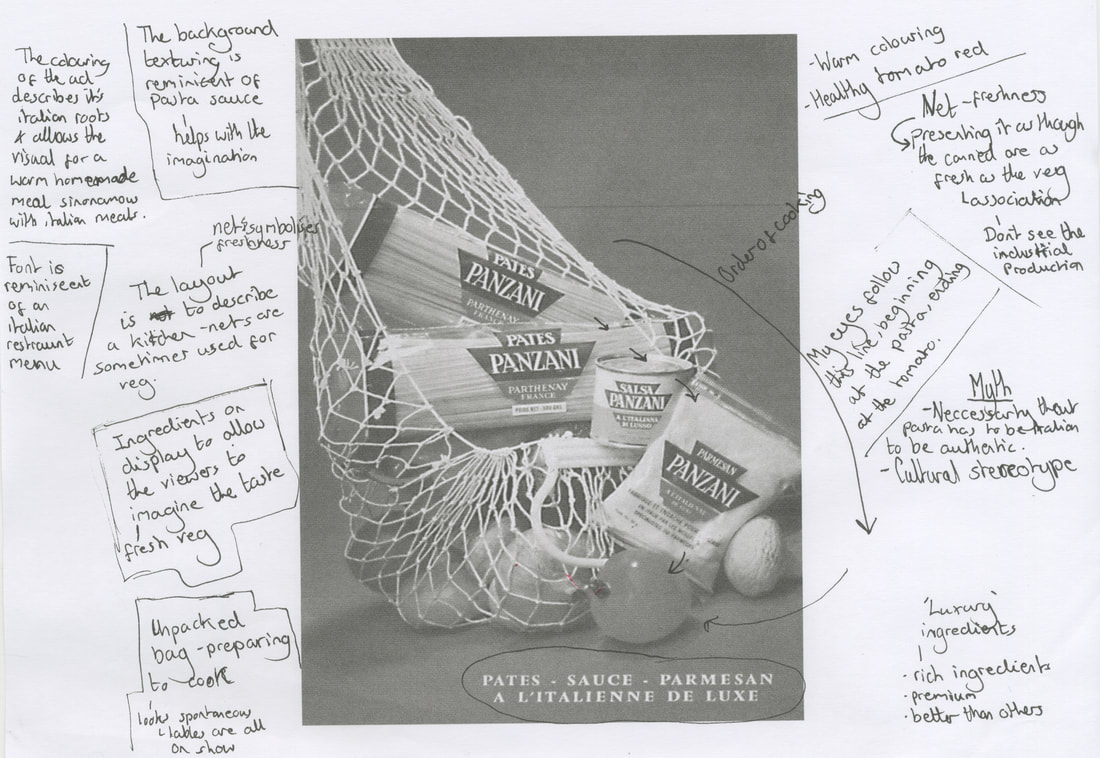
|
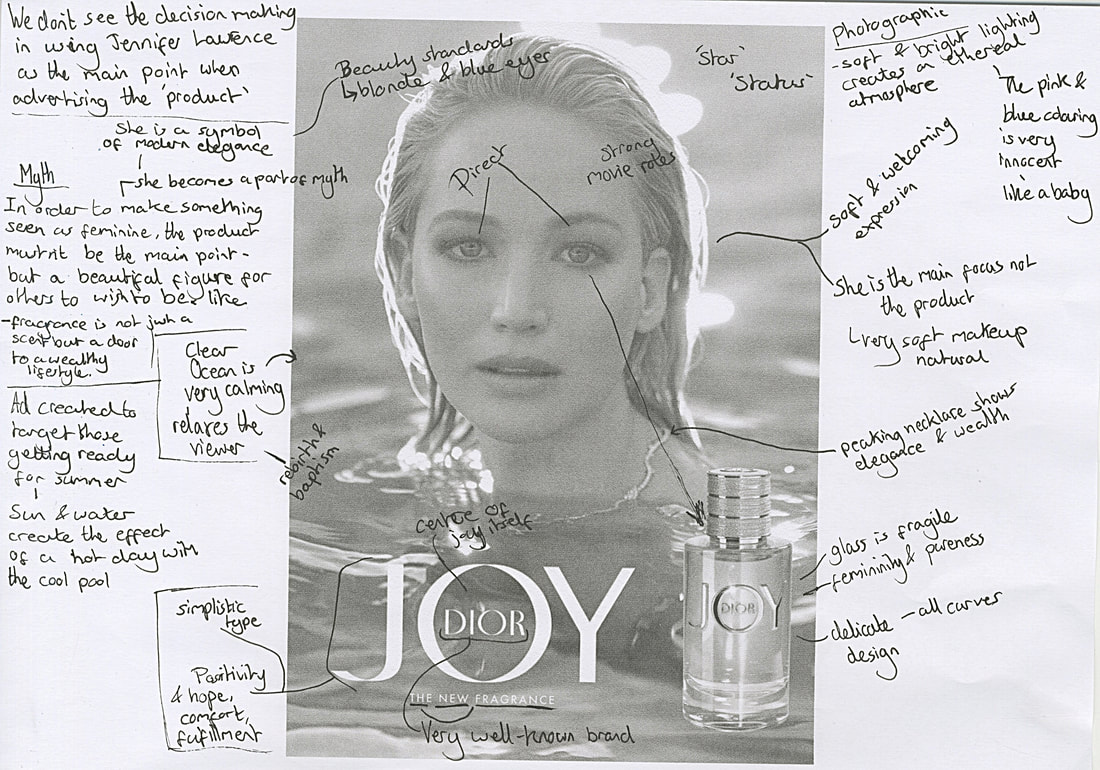
|
|

|
Helpful Youtube videos
|
|
|
session four research blog
|

|
|
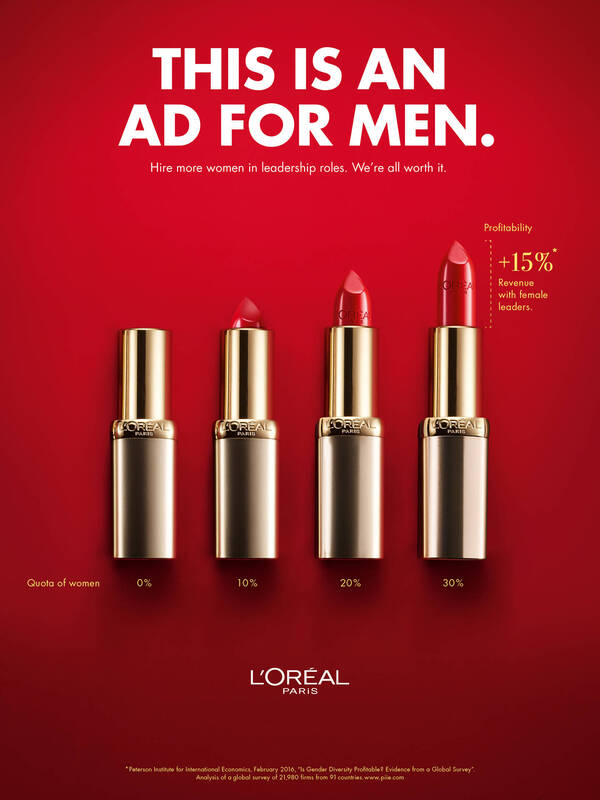
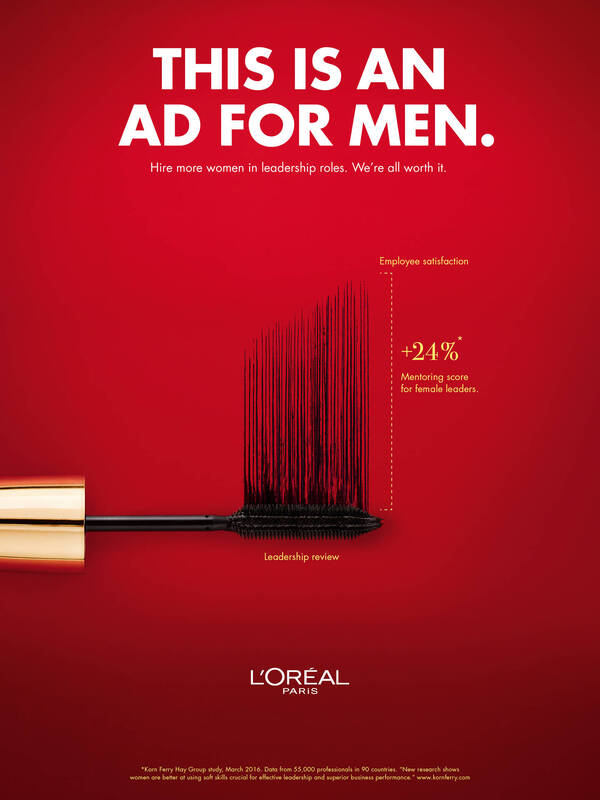
The advertisement I have chosen is L'Oréal's ‘An Ad For Men’ campaign which cleverly tackles gender inequality in leadership. The advertisement uses feminine symbols to convey a message about leadership towards men, subverting established gender stereotypes while denotatively promoting beauty items. The lipstick, in particular, can be perceived as connoting how a woman’s appearance is commonly perceived as a correlation of their power.
This advertisement strongly challenges the deeply ingrained cultural perception that corporate leadership is a field dominated by men on a mythological level. It presents diversity as a catalyst for success rather than a token gesture by putting feminine-coded items in a male-oriented area, and so it reinterprets professional gender stereotypes. According to the Barthes’s L'Oréal's campaign challenges prejudices on several semiotic levels and reframes diversity as a moral and financial necessity.
This advertisement strongly challenges the deeply ingrained cultural perception that corporate leadership is a field dominated by men on a mythological level. It presents diversity as a catalyst for success rather than a token gesture by putting feminine-coded items in a male-oriented area, and so it reinterprets professional gender stereotypes. According to the Barthes’s L'Oréal's campaign challenges prejudices on several semiotic levels and reframes diversity as a moral and financial necessity.
|
|
In 2019, L'Oréal Paris, in collaboration with McCann Germany, launched the "This Is An Ad For Men" campaign to address gender disparities in corporate leadership. The campaign strategically employs a minimalist design and data-driven visuals to appeal to a corporate audience, effectively reframing cosmetics as symbols of empowerment and profitability.
|
Further readings
I have done some further reading outside of class in order to strengthen my understanding.
Stanford study of Peirce's Theory of Signs
|
Peirce’s and Barthes’ theories on semiotics both examine how signs create meaning, but they differ in structure and focus. Peirce’s triadic model defines a sign through three elements: the sign (representamen), the object it refers to, and the interpretant, or the meaning derived from it. His approach emphasizes infinite semiosis, where interpretation is an evolving process. In contrast, Barthes builds on Saussure’s dyadic model, which consists of the signifier (the physical form) and the signified (the concept it represents). While Peirce classifies signs as icons (resembling reality), indices (causally linked), and symbols (arbitrary and conventional), Barthes focuses on how culture and ideology shape meaning, introducing the concept of myth to explain how dominant social narratives become naturalized. Peirce’s semiotics is widely applied in logic, branding, and scientific communication, while Barthes’ approach is more relevant to media studies, advertising, and political messaging, revealing how signs manipulate social power. Ultimately, Peirce’s theory is philosophical and logical, exploring the mechanics of sign interpretation, whereas Barthes’ theory is cultural and ideological, analyzing how meaning reinforces societal beliefs.
|
|
session five - The Graphic code of comics
Notes taken during lesson
|

|
|

|
Assigned reading
|
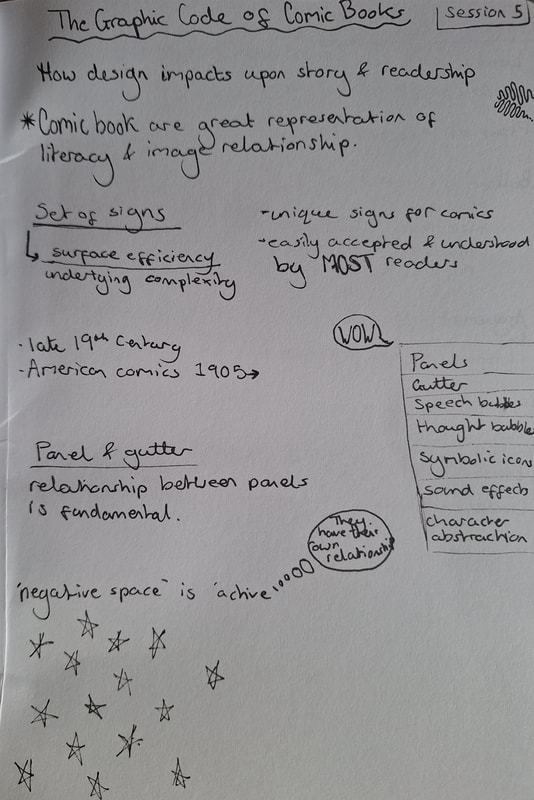
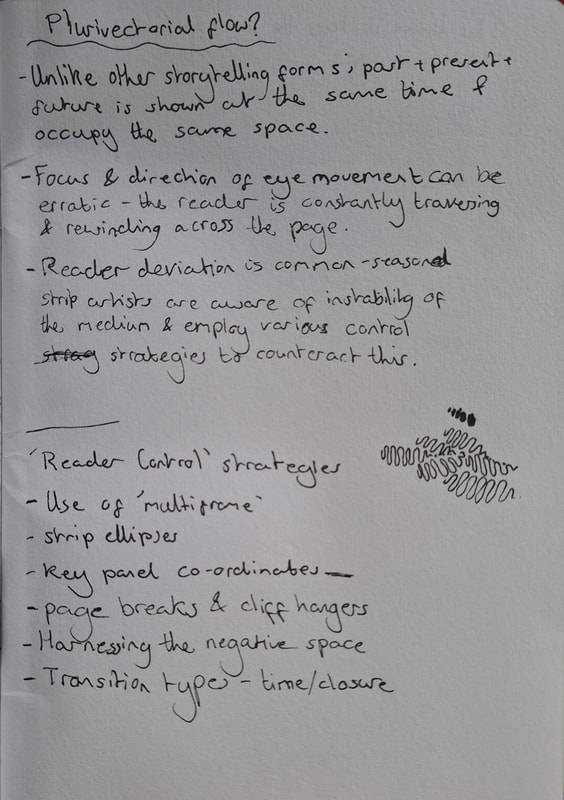
Highlighted in this publication of ‘Spatial Poetics’ by Nick Dodds, he emphasises the unique interaction of comics of how readers interact with the layout and panel changes to interpret the time and space. He highlights how the artists employ composition and gutters to regulate pacing, bringing comparisons to film approaches. Dodds mentions that comics need active interpretation in the form of using spatial layout, he argues that it is just as important as the dialogue.
|
|
During the Session

|
|
Session five research blog
|
|
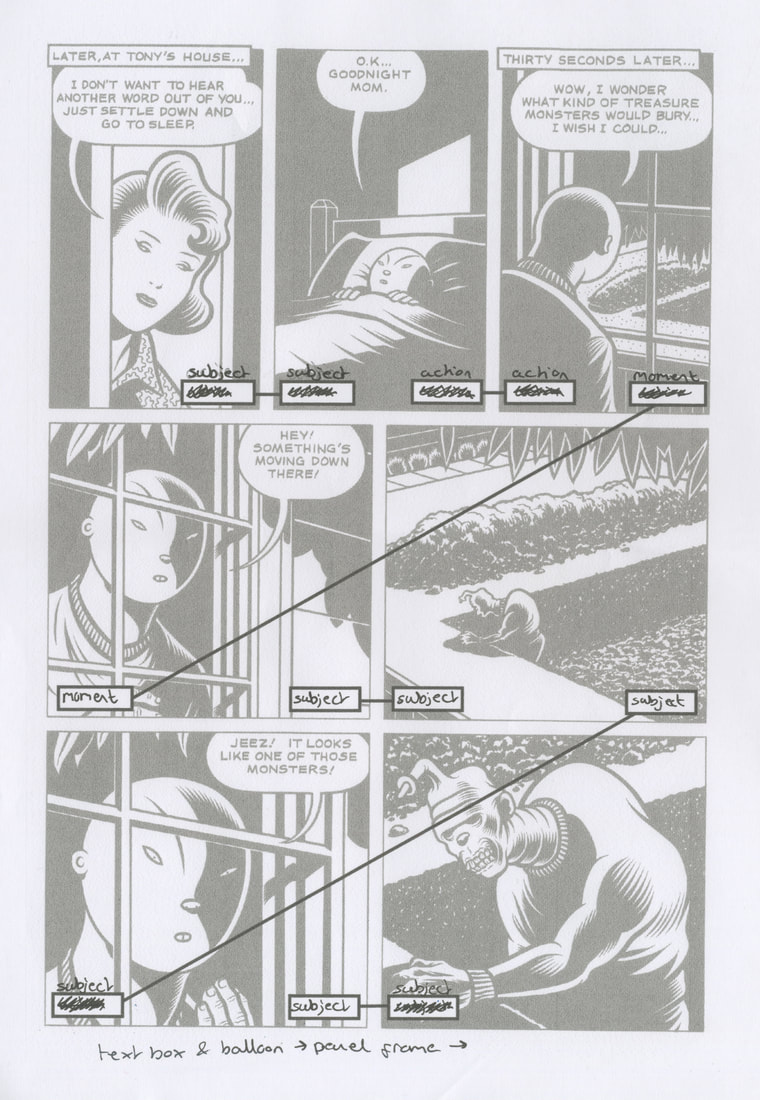
In this video, Scott McCloud’s six types of panel-to-panel transition in comics are analysed as guides to change the reader’s experience and comprehension in how the comic creators convey narratives wish to evoke specific emotional responses. The presenter uses examples throughout to illustrate how these transitions function to structure comic storytelling and enhance reader engagement.
|
|
Here I have found a video from Harvard University of Scott McCloud performing a speech about the powerful role of visual storytelling in communication, exploring the relationship words and images and how comics have the unique ability to present complex ideas through the arrangement of panels to influence pacing and comprehension. McCloud highlights the influences of our everyday experiences have on the way we perceive comic functions as a medium for communication. Additionally, he presents Powerpoint slides alongside his explanation of the importance of design and clarity in the visual storytelling, advocating for minimalism to enhance understanding.
|
|
Context for my chosen comic
|
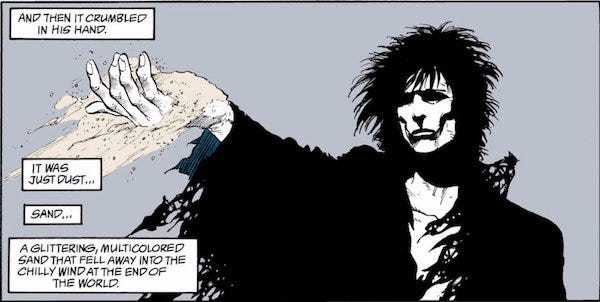
In the Sandman graphic comics written by Neil Gaiman, the main is Dream, also referred to as Morpheus or the Sandman. He is one of seven siblings that make up the Endless, a powerful family of anthropomorphic beings who represent universal ideas like Destiny, Death and Desire. As the embodiment of dreams, Dream rules over the collective unconscious and imagination. He is usually designed as wearing black robes, with pale skin and unkept hair. Because of his vast responsibilities, he is typically read and seen as exhibiting a sombre and introspective manner. Throughout the series, Dream's interactions with mortals and other entities explore themes of change, accountability, and the impact of dreams on reality. However, he has two 'aspects': Daniel solely embodies dreams and is Dream's design antithesis.
|
|

|

|
First Analysis

|
The page from Sandman excellently employs McCloud’s transition types in order to create the necessary dream-like, layered narrative. The layout is dominated by aspect-to-aspect transitions, different elements of the environment and characters are presented to establish mood rather than advance the plot directly. Being that the story follows a character who can manipulate reality and the dreamscape, the artists utilise the panel designs themselves to describe to the reader the figures, Daniel’s, powers in this pages as the panels warp with the movement of his hands showing subject-to-subject transition Even when the figure moves his hand, the action-to-action transition appear to depict sequential physical actions. A blending of panels suggests possible scene-to-scene transitions, requiring the readers participation to decipher the use of reality and dreamscapes merging fluidly. This is one of may pages in Sandman to exemplify Sandman’s unique storytelling, where McCloud transition types are used to strengthen the surreal, shifting reality in the narrative.
|
Second Comic Page
|
Another panel I wanted to look further into is from The Sandman: Preludes & Nocturnes, depicts a scene in Hell where Dream confronts Lucifer for a battle, this scene employs Scott McCloud’s subject-to-subject transitions innovatively to further the narrative tension and thematic depth. Even whilst the focus shifts between Dream, Lucifer and the surrounding demons’ reactions, the transitions used ensure that it doesn’t lose the cohesive context. These techniques chosen by the artists enriches the storytelling in the comic medium, in terms of this page it heightens the immediacy of the situation and the complex power dynamics at play. The employment of speech bubbles also enhances the narrative’s depth and character distinction. According to Scott McCloud’s analysis in Understanding Comics, speech bubbles are a way for the artists and writing to convey dialogue and amotion, serves as visual representations of speech that guide the reader’s experience.
|

|
In this depicted scene, the speech bubbles themselves are used as a tool to be read to further describe the characteristic of the individuals. For example, Dream’s speech bubbles are depicted with black backgrounds and white text, opposing the usual white background and black text. This design choice not only emphasises Dream’s unique nature as an endless but also plays a role in depicting his otherworldliness, a being that the reader’s cannot reach. The choice of inverting the colours could have been the artists attempting to provide the reader an example of Dream’s “inversion” of the awaking world, as a being holding the collected subconscious.
Another aspect of the shape and style of the bubbles is that it contributes to the character differentiation. For instance, though not shown in this page, Lucifer being a fallen angel who belongs to the divine order is presented with much more traditional speech bubbles. On the other hand, the viewing demons have much more jagged edges or unconventional fonts in their bubbles, conveys their chaotic and menacing nature.
Another aspect of the shape and style of the bubbles is that it contributes to the character differentiation. For instance, though not shown in this page, Lucifer being a fallen angel who belongs to the divine order is presented with much more traditional speech bubbles. On the other hand, the viewing demons have much more jagged edges or unconventional fonts in their bubbles, conveys their chaotic and menacing nature.
Overall
The Author and artists utilises numerous transition types and the gutters to enhance the narrative and atmosphere in a creative way. Action-to-action are used to highlight changes in Dream’s state or action, while moment-to-moment are used to otherwise depict Dreams subtle emotional shifts in his interactions. To represent the shifting between the realms and to create sense of vastness and complexity, subject-to-subject transitions are used.
The subject-to-subject transitions show the shifting focus between the characters and the scene-to-scene to represent the movement between the different realms, creating a sense of vastness and complexity. What I found whilst researching the Sandman comics for this blog is the way the ambitiously designed gutters are used as a tool to allow the readers to fill in the gaps to perceive the surreal and dream-like scenes, reinforcing the comics exploration of dreams and the subconscious. The utilisation of all of these contributed to the immersive and multifaced storytelling of The Sandman.
The subject-to-subject transitions show the shifting focus between the characters and the scene-to-scene to represent the movement between the different realms, creating a sense of vastness and complexity. What I found whilst researching the Sandman comics for this blog is the way the ambitiously designed gutters are used as a tool to allow the readers to fill in the gaps to perceive the surreal and dream-like scenes, reinforcing the comics exploration of dreams and the subconscious. The utilisation of all of these contributed to the immersive and multifaced storytelling of The Sandman.
Additional Readings
When looking for information about the Sandman comics I found academic reports about the Graphic novels and how the multiple artists use dreams as a construct for the story building and utilise the panels and gutters to their advantage.
The Sandman: The Article of Comics and Power for Dreams by Nathan Teft
|
|
The thesis The Sandman: The Artifice of Comics and Power of Dreams explores how Neil Gaiman’s The Sandman uses the unique medium of comics to examine storytelling, dreams, and power. It likely discusses the concept of artifice, showing how the series draws attention to its own construction through the interplay of text and image. Dreams serve as both a narrative device and thematic exploration, shaping reality, identity, and human creativity within the story. The thesis also examines power structures, particularly through Morpheus and other mythological or literary figures, analyzing how control and autonomy function in the series. Additionally, it delves into The Sandman’s intertextuality, highlighting its deep connections to mythology, literature, and history to create a metafictional, layered narrative. Lastly, it likely incorporates comics theory, possibly referencing Scott McCloud, to analyze how the series leverages visual storytelling to reinforce its themes. Ultimately, the thesis argues that The Sandman is a self-aware work that uses the artifice of comics to explore the complex relationship between storytelling, dreams, and power.
|
This paper is an easy laid out plan for their thesis but still it highlights some great points about the use of transitions and gutters utilised in the Sandman comics.
|
This paper argues that rather than viewing panels, frames, and gutters as fixed elements of the comics medium, their meaning is shaped by the specific narratives in which they appear. Focusing on Neil Gaiman’s The Sandman, the author contends that the series demonstrates how gutters—traditionally understood as mere spaces between panels—can be used to generate meaning in ways that extend beyond Scott McCloud’s framework in Understanding Comics. Using semiotic analysis, the paper will explore how The Sandman utilizes gutters to enhance storytelling in ways that cannot be understood without considering the narrative context. Additionally, the author challenges the common classification of comics as literature, arguing that while comics should not be universally grouped with literary works, certain comics, including The Sandman, can be considered “literary” in a meaningful sense—though this designation should be applied selectively.
|
|
Session 6: SUBCULTURE & STYLE
Notes taken during lecture

|
|

|

|

|

|
Assigned reading
|
|
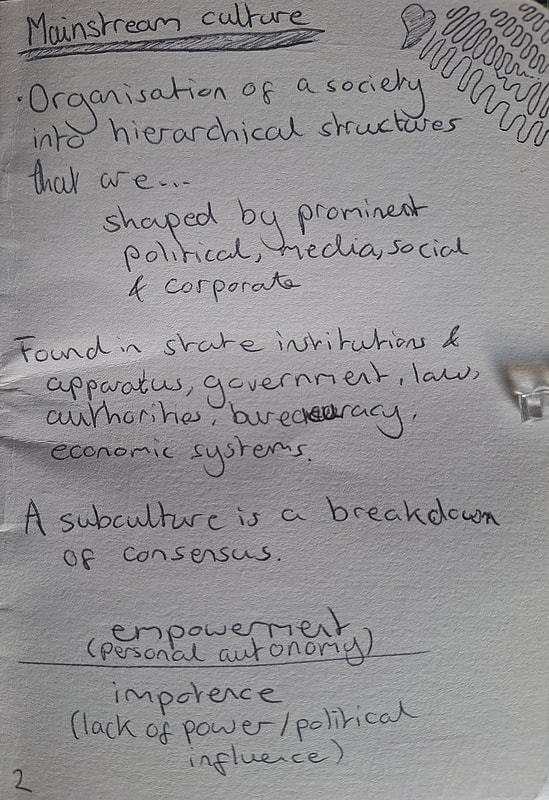
In Chapter Six of The Meaning of Style, Dick Hebdige explores how subcultures, initially forms of resistance, are eventually absorbed into mainstream culture through a process of incorporation. He outlines two key ways this happens: commodity form, where subcultural symbols like punk fashion are mass-produced and sold, stripping them of their rebellious meaning, and ideological form, where the media reinterprets subcultures in a way that neutralizes their political or social threat. Hebdige argues that while subcultures emerge as challenges to dominant norms, capitalism continuously adapts by commercializing their styles, turning them into trends. This cycle of resistance and assimilation demonstrates how subcultural identity is always at risk of being co-opted by the very systems it seeks to oppose.
|
During the Session
|
Allen Ginsberg’s Howl is a groundbreaking poem that captures the disillusionment and rebellious spirit of the Beat Generation, critiquing conformity, capitalism, and social repression in post-war America. Written in long, free-flowing lines inspired by Walt Whitman, the poem portrays outsiders, drug users, poets, and radicals as victims of a dehumanizing society, referring to the industrial system as "Moloch," a destructive force that consumes creativity and individuality. Howl’s raw, explicit language and themes of sexual freedom, mental illness, and spirituality challenged literary and social norms, leading to an obscenity trial that tested the limits of free expression. Ultimately, the poem stands as both a protest and a celebration of those who resist societal constraints, making it a defining work of countercultural literature.
|
|
Session six blog task
|
Defining a subculture using an additional academic source.
A subculture is generally defined as a group of people within a larger cultural context who share distinct values, beliefs, practices, and behaviours that set them apart from the dominant culture. These groups may form around shared interests, social movements, or cultural expressions that reflect alternative ways of thinking or living. According to sociologist Howard Becker in Outsiders: Studies in the Sociology of Deviance (1963), subcultures are a response to the mainstream culture, often developing their own set of norms and expectations that can be in contrast to or deviant from the societal majority. Subcultures are not merely isolated; they influence and are influenced by the larger society, and may shift in response to cultural, political, or economic changes.
|
Becker, H. S. (1963) Outsiders: Studies in the Sociology of Deviance. New York: Free Press.
|
Cultural Capital Fashion
Cultural capital, a concept introduced by sociologist Pierre Bourdieu, refers to the non-economic resources individuals possess, which can influence their social mobility and position within society. It encompasses knowledge, education, skills, tastes, cultural competencies, and behaviours that are valued by a particular social group or society. These forms of capital can be accumulated through family background, education, or social experiences, and they play a crucial role in shaping an individual's ability to navigate and succeed in different social, educational, and professional contexts.
In Bourdieu's framework, cultural capital exists in three forms:
In Bourdieu's framework, cultural capital exists in three forms:
- Embodied – personal traits, skills, and knowledge that are ingrained in an individual through socialization.
- Objectified – material items that carry cultural value, such as art, books, or other cultural artifacts.
- Institutionalized – credentials and qualifications that are recognized within society, such as degrees or certifications.
My Chosen Fashion
|
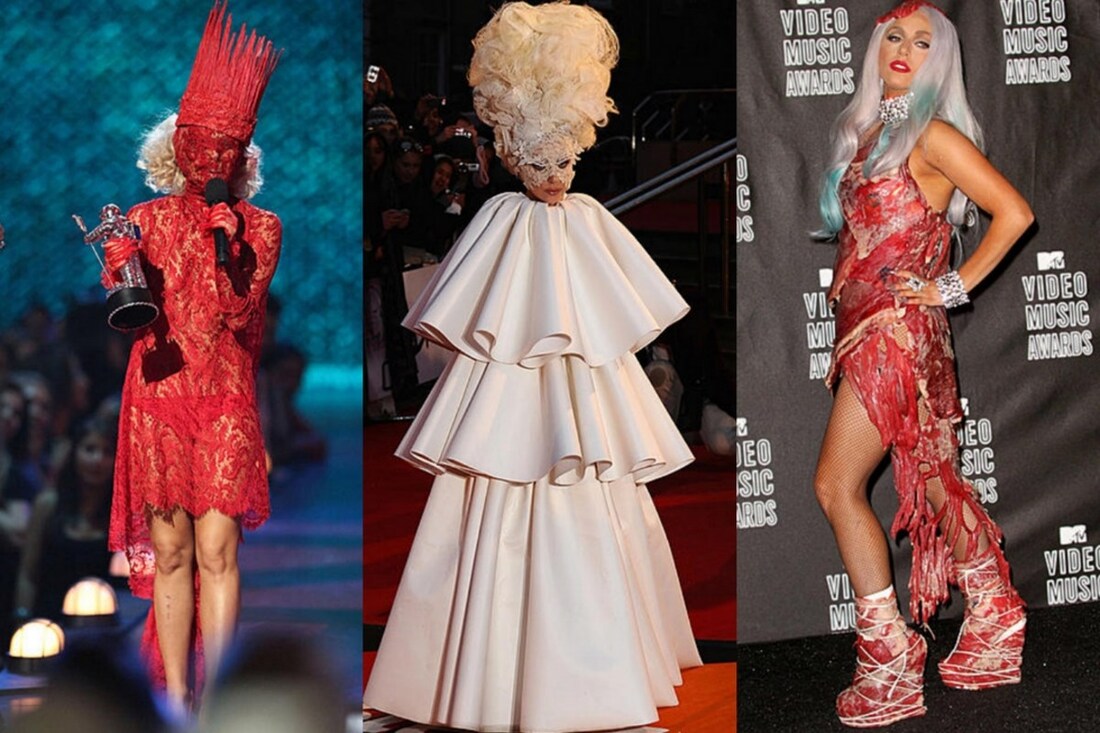
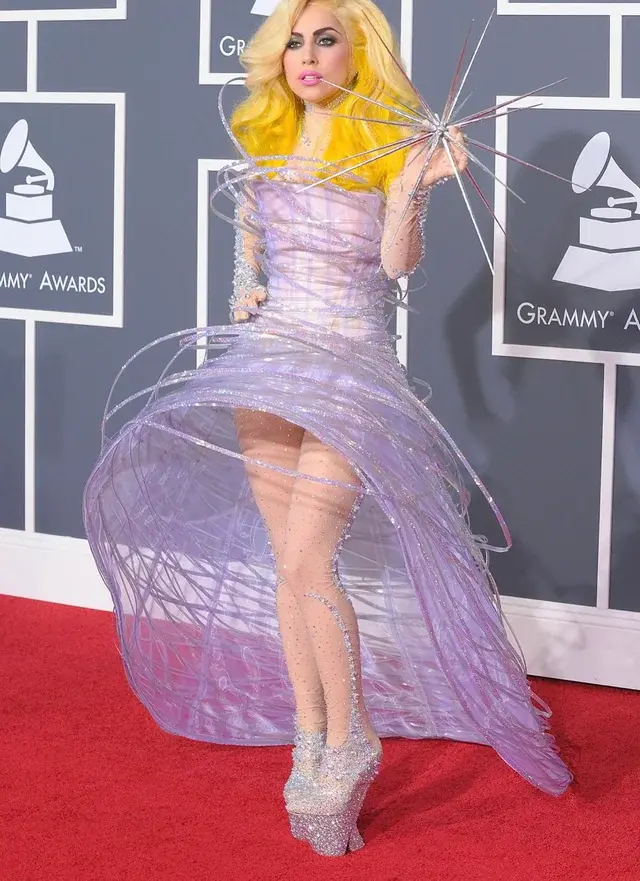
Instead of looking into a set subculture in fashion, I wanted to focus on the Icon Lady Gaga, who through her fashion has influenced and caused the creation of many subcultures in fashion. So I will focus on her influence on her fans and fashion.
|
|
|
|
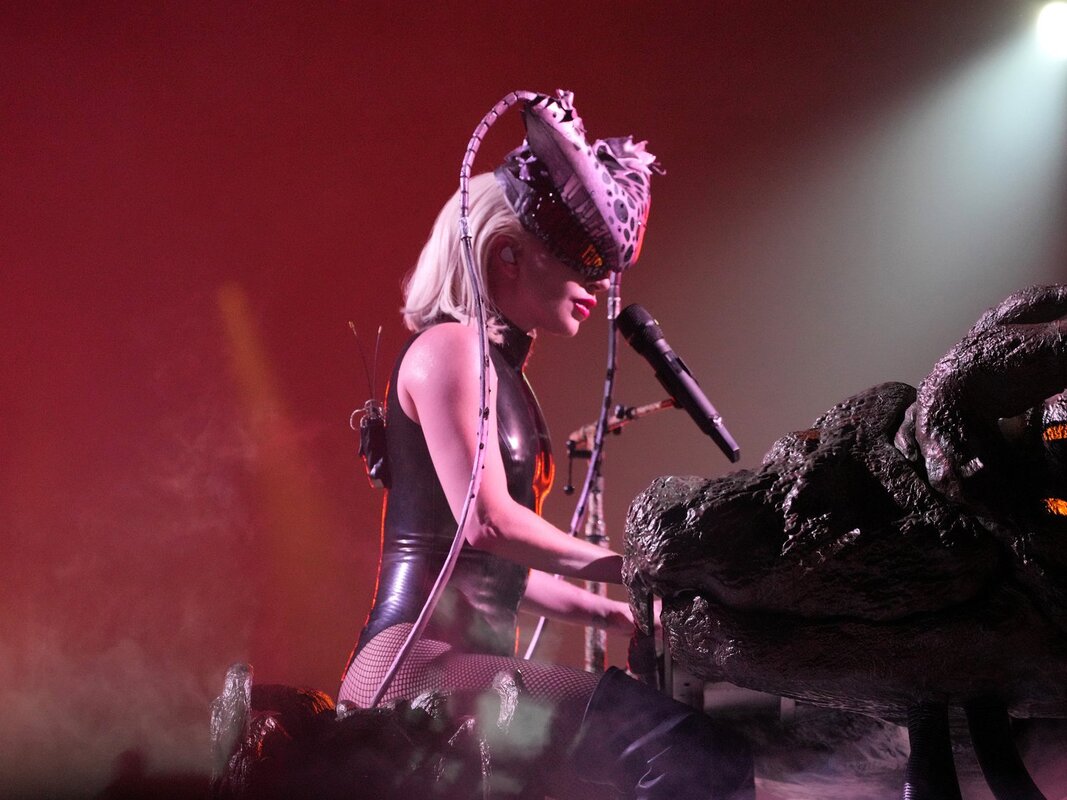
There are four main major subcultures that Lady Gaga had an influence on, she isn’t just a pop icon but a cultural phenomenon. She has left an indelible mark on fandom culture, avant-garde club fashion, cyber aesthetics, and LGBTQ+ expression, this is all through her music, fashion and activism. Here I will use this blog to explore her influence on four major subcultures: the Little Monsters fandom, the Club Kid revival, Pop Futurism, and LGBTQ+ and drag culture.
|

|
|
The Little Monsters: A unique Fan Subculture
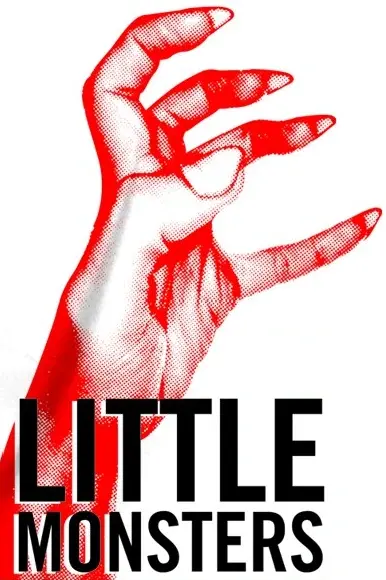
This is probably the subculture that was most influenced by Gaga, being that it is her own dedicated fanbase that it originates from. It is a subculture defined by inclusivity, self-expression, and empowerment, through this they set themselves apart from typical fan groups, they embrace Gaga’s message of individuality and creating a strong global community. Her influence has allowed her fans to encourage self- acceptance, especially amongst those of marginalised groups, fans have created themselves a digital community where they can express themselves through art, fashion, and activism. There is even a symbol Lady Gaga created to symbolise unity, the ‘Monster Claw’ and most importantly inspired social change through Gaga’s Born This Way Foundation which promoted mental health and anti-bullying initiatives. |
Club kid revival: The Return of Avant-Garde Fashion
One which Gaga drew heavy influence for her fashion and performance style in the Club Kid movement from the 1980s and 1990s. People of this subculture were known for their extravagant rule-breaking outfits, which blended camp, surrealism, and gender-fluid aesthetics. Her influence on the subculture follows as such, bringing back and allowing Club Kid- inspired fashion into mainstream culture with over-the-top looks, for example her meat dress and extreme platform shoes. She uses Club Kid to celebrate through her androgynous and gender nonconformity in both her fashion and stage performances. In order to push the boundaries of avant-garde fashion, Gaga has collaborated with designers like Alexander McQueen and Nicola Formichetti and encouraged younger generations to embrace their theatrical style and experiment with personal style. |
|
|
Lady Gaga Now (2024) 2024 Gaga McQueen Fashion. Available at: https://ladygaganow.net/news/2024-gaga-mcqueen-fashion/ (Accessed: 6 March 2025).
|
|
Pop Futurism: Blending Technology with Fashion and Music
Her influences from this subculture are shown through the incorporation of sci-fi-inspired outfits, metallic fabrics, and robotic elements, she has also used virtual reality, AI, and CGI in music videos and performances (as shown below). Her significance on the cyber and tech-driven aesthetics of Pop Futurism subculture is shown through the merging of her music, performance, and futuristic visuals. Furthermore, according to Polhemus (1994), subcultures evolve through the blending of fashion, music, and technology, which simply reinforces Gaga’s role in pushing the boundaries. Polhemus, T. (1994). Streetstyle: From Sidewalk to Catwalk. Thames & Hudson.
|
|
The Perfect Magazine (2024) Lady Gaga Chromatica Ball Fashion Outfits: Every Look from the Summer Tour's Opening Night. Available at: https://www.theperfectmagazine.com/features/lady-gaga-chromatica-ball-fashion-outfits-summer-tour-every-look-opening-night (Accessed: 6 March 2025).
|
|
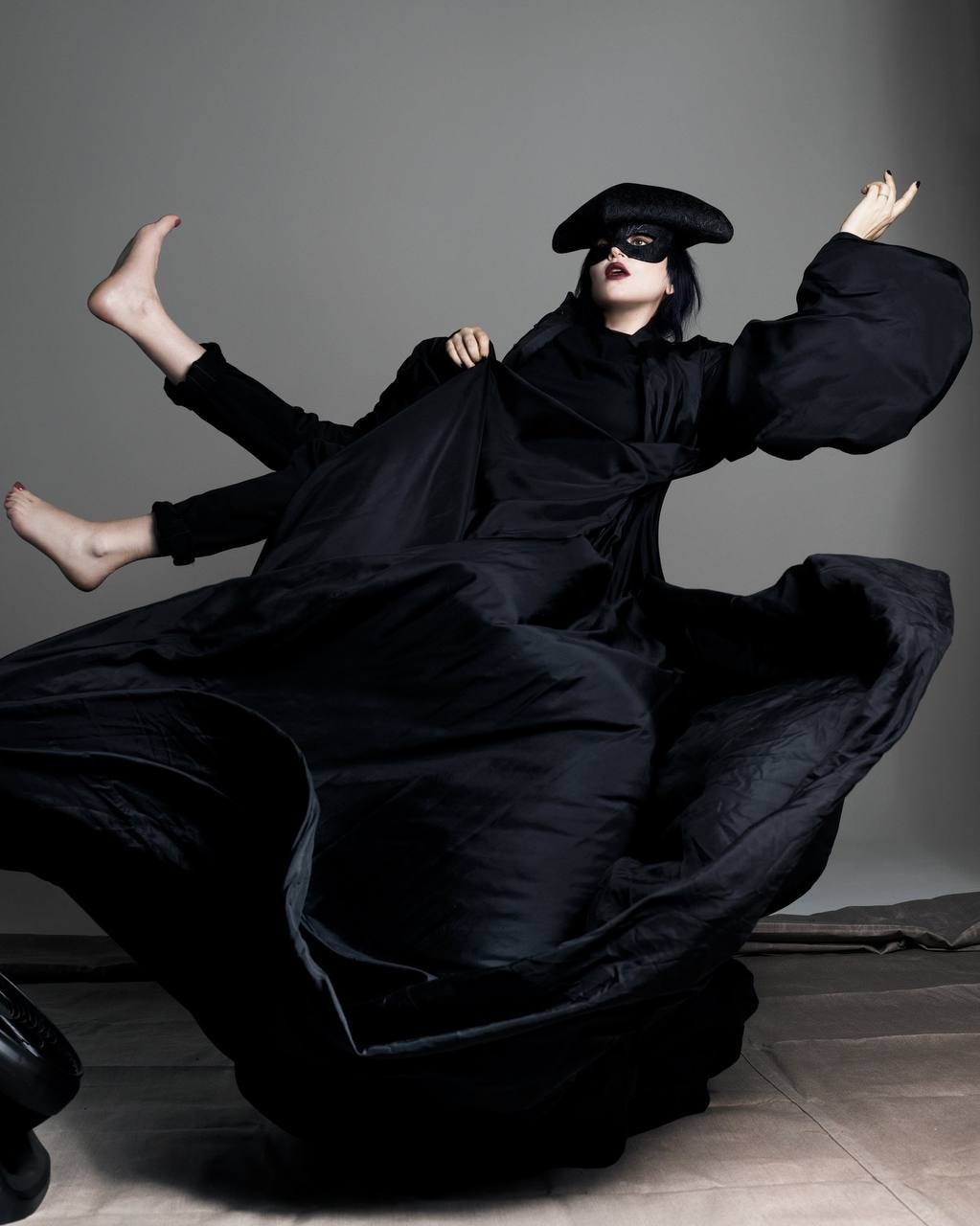
MTV (2011) Lady Gaga – Jo Calderone VMA Monologue (2011 MTV Video Music Awards). Available at: https://youtu.be/XWcZeYvJ0D0 (Accessed: 7 March 2015)
|
LGBTQ+ and Drag Culture: An Icon for Queer Expression
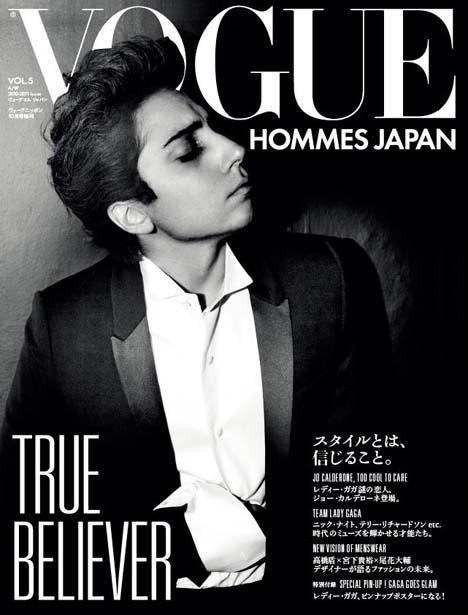
Being a member herself, Lady Gaga has long been vocal in her support of the LGBTQ+ community, and her work is deeply tied to drag culture, ballroom aesthetics, and queer performance art. As spoken about before, Her Born This Way campaign is a direct show of her support in advocating LBGTQ+ rights and sparking activism. Her influence on Dragn and LGBTQ+ has extends further than her music, she has become a symbol of queer resilience and artistic freedom, shaping a new generation of LGBTQ+ creatives. She has even created a Drag King persona for herself "Jo Calderone".
Sutori (n.d.) Influences of drag & LGBTQ+ culture on the iconic Lady Gaga. Available at: https://www.sutori.com/en/story/influences-of-drag-lgbtq-culture-on-the-iconic-lady-gaga--q9rPsyLuZXvjHxxox2Znj7Np (Accessed: 7 March 2025)
|
In Conclusion, Gaga has created a long-lasting legacy on subcultures, her ability to inspire not one but four subcultures (possibly more) is an amazing ability, she has ensured she has the ability to reinvent herself whilst staying true to her artistic vision and yet she still sparks creativity, inclusivity, and cultural transformation.
session 7: Gender, Identity & representation
Notes taken during lecture

|

|
Covers from analysis
|

|
Session seven blog task
Laura Mulvey’s essay – Visual Pleasure & Narrative Cinema.
|
Key Points-
The Male Gaze - Patriarchal viewpoint which Classical Hollywood cinema is structed around. - The difference in the portrayal of how women are often passive objects of male desires, whilst men are the active spectators. - The cinematic camera adopts a male perspective, which reinforces the gendered power dynamics. Scopophilia (Pleasure in Looking) - Mulvey mentions the Freudian psychoanalysis to apply scopophilia, the pleasure derived from looking. - Voyeurism in encouraged through cinema, where women are displayed for male visual enjoyment. |
|
Identification with the Male Protagonist
Women as “To-Be-Looked-At” objects
The Castration Anxiety & Fetishism
- Punishing or saving women to restore male dominance (Sadistic Narrative Control)
Critique of Classical Hollywood Cinema
- The plot is driven by a hero, who controls the narrative, this is focused on making the male viewers identifying with said hero.
- The female character main exist as erotic spectacles rather than agents of the story.
Women as “To-Be-Looked-At” objects
- Women often are shown in fragmented close-ups of body parts, to fetishise them in film.
- Women are turned into symbols of desire rather than independent subjects.
The Castration Anxiety & Fetishism
- Again, Mulvey used Freud’s theory, argues that men view women as symbols of castration anxiety (lack of phallus),
- Cinema employs two strategies to overcome this,
- Punishing or saving women to restore male dominance (Sadistic Narrative Control)
Critique of Classical Hollywood Cinema
- The visual style of Hollywood’s visual style reinforces the gender roles through its use of training, editing, and perspective.
- Overall, this essay calls for the need for alternative cinema that challenged this structure and disrupts the male gaze.
Ideas for the essay
The essay question I am most likely going to chose is number 3 - Sequential Illustration: Choose two graphic novels and conduct a close formal analysis and comparison.
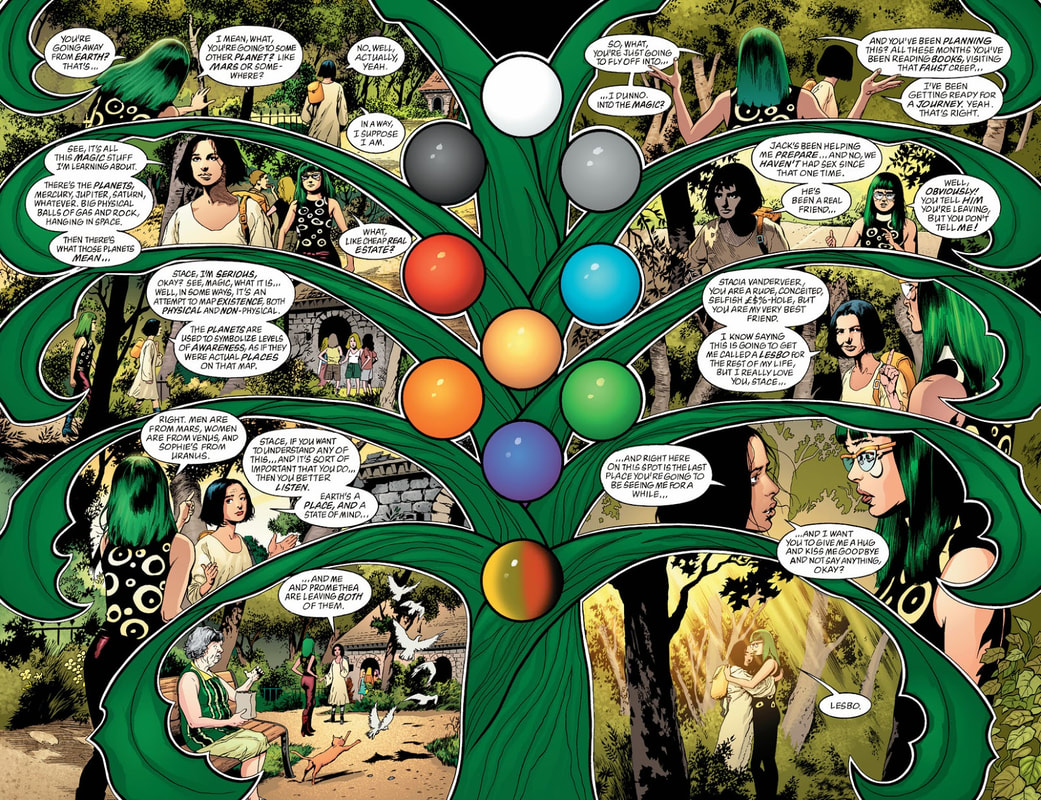
One of the graphic novels I have chosen is 'The Sandman', as I have analysed some pages and the panel transitions previously, I know this will be one which will work with the questions asked. However, I have been at a standstill as for which other novel to use to also analyse and compare/note compassions with 'The Sandman', the two which I am have narrowed it down to is the 'Watchmen' and 'Promethea' (both by Alan Moore). They each have their own strengths when it comes to answering the questions, for instance the 'Watchmen' has a structural contrast to 'The Sandman' using a more consistent grid panel layouts, whilst 'Promethea' mirrors Sandman's experimental style in ways of panels and text.
comparison
One of the graphic novels I have chosen is 'The Sandman', as I have analysed some pages and the panel transitions previously, I know this will be one which will work with the questions asked. However, I have been at a standstill as for which other novel to use to also analyse and compare/note compassions with 'The Sandman', the two which I am have narrowed it down to is the 'Watchmen' and 'Promethea' (both by Alan Moore). They each have their own strengths when it comes to answering the questions, for instance the 'Watchmen' has a structural contrast to 'The Sandman' using a more consistent grid panel layouts, whilst 'Promethea' mirrors Sandman's experimental style in ways of panels and text.
comparison
add page numbers
Possible pages to use and compare
Sandman - Neil Gaiman & many others

Gaiman, N. and Williams, J.H., (2015). The Sandman: Overture. Vertigo Comics.

|
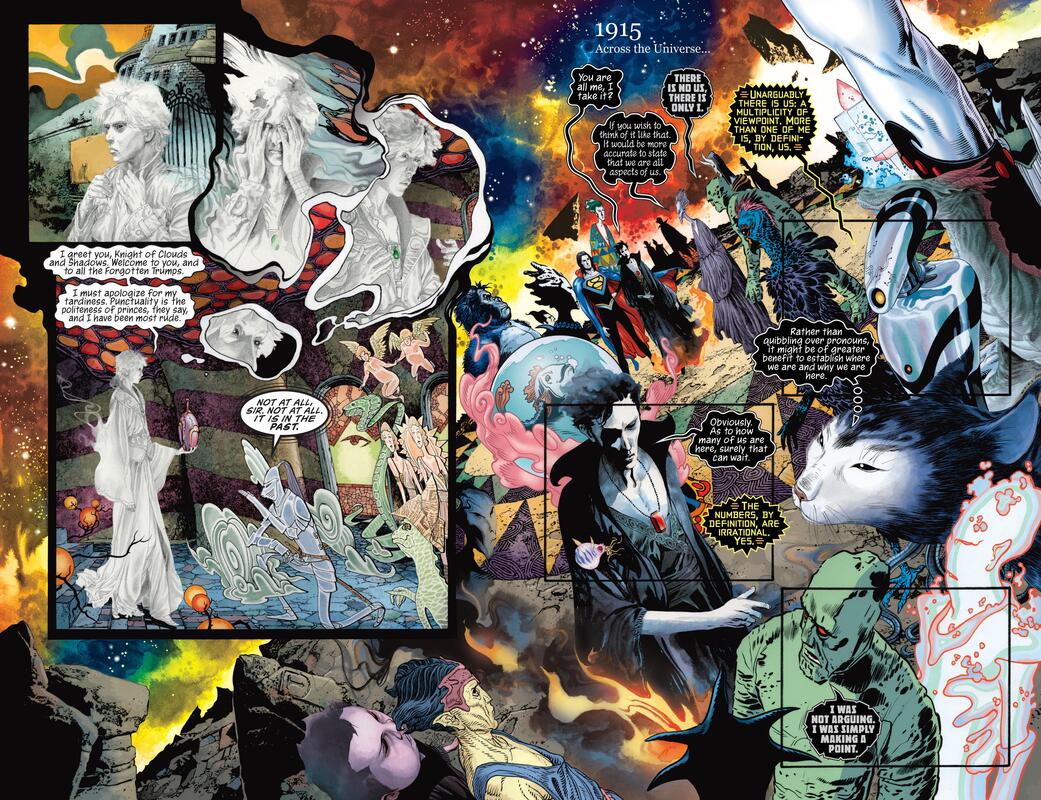
Gaiman, N., & Williams III, J.H. (2015). The Sandman: Overture. Vertigo Comics.
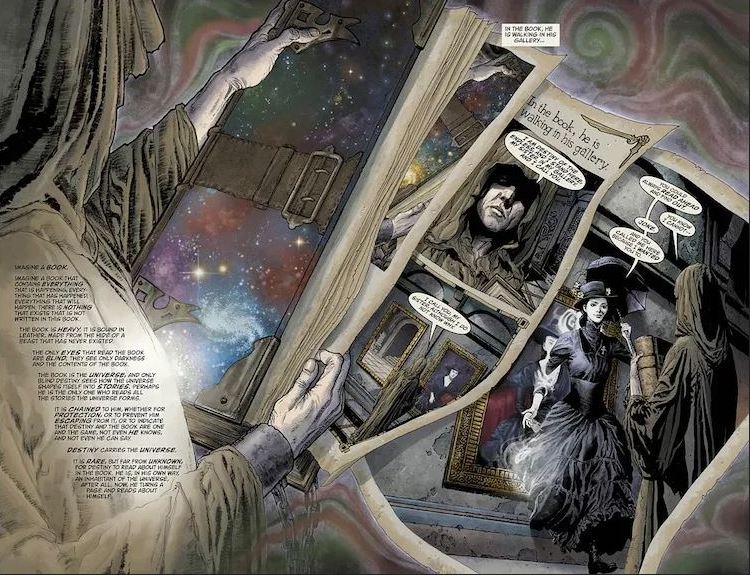
|

|
|
Gaiman, N., & Thompson, J. (1994). The Sandman: Brief Lives (Vol. 7). DC Comics.
|
Promethea - Alan Moore & JH Williams III

|
|

Alan M., & JH W (first published 1999). Promethea issue #24, ([pages 8-9]). America's Best Comic
|

|
After some research I found out that JH Williams III has worked on both graphic novels, I checked to see if it's still possible for me to complete my essay using these specific novels, if not I will research more into 'Watchmen'.
Possible academic sources
'The Divine Sandman' - Erica McCrystal
|
|
Cognitive Processing of Words and Images: McCrystal references Scott McCloud’s distinction between 'received information' (images) and 'perceived information' (words), emphasizing that while images are immediately processed, words require more effort to decode. This theory helps explain the dynamic between visual and textual elements in The Sandman, as readers engage with both simultaneously.
- Reader Participation in Comics: The paper discusses how readers actively engage in creating meaning in comics, facilitated by creators' choices in visual and textual representation. This active role is central to understanding how The Sandman functions as a narrative and artistic work. |
- Sequential Art and Its Impact: McCrystal explores Will Eisner's concept of comics as 'sequential art,' where the arrangement of images and words in a deliberate sequence allows for a unique storytelling medium that combines visual and textual elements. This is key to understanding the artistic structure of The Sandman and how its visual storytelling enhances the narrative.
-Reference to Scott McCloud: McCrystal acknowledges McCloud’s influence on the study of comics, particularly his ideas about how comics work as a medium for cognitive processing. McCrystal applies McCloud’s theories to show how the combination of text and image in The Sandman invites a deeper, more interactive reading experience.
These insights emphasize the complex relationship between visual and textual elements in The Sandman, illustrating how their interplay contributes to the depth and richness of the narrative.
-Reference to Scott McCloud: McCrystal acknowledges McCloud’s influence on the study of comics, particularly his ideas about how comics work as a medium for cognitive processing. McCrystal applies McCloud’s theories to show how the combination of text and image in The Sandman invites a deeper, more interactive reading experience.
These insights emphasize the complex relationship between visual and textual elements in The Sandman, illustrating how their interplay contributes to the depth and richness of the narrative.
Theory of Comics and Sequential Art - Will Eisner
Unfortunately, the pdf of the paper is too large for me to add it here but I will still write the notes here for research.
These key points from Theory of Comics and Sequential Art outline how Eisner views comics as a multifaceted medium that blends visual storytelling, cognitive interaction, and narrative structure.
- Comics as Sequential Art: Eisner defines comics as "sequential art," where a combination of images and words (when placed in sequence) conveys a narrative or meaning. He emphasizes that comics are a unique medium in which the juxtaposition of images and text creates a distinct storytelling experience.
- The Role of the Gutter: Eisner introduces the concept of the "gutter," the space between comic panels, which invites readers to actively participate in interpreting the passage of time and the connection between scenes. This space encourages cognitive engagement as readers fill in the gaps.
- Visual Grammar: Eisner discusses the concept of a visual grammar in comics, akin to linguistic grammar, which governs how readers interpret images, symbols, and their relationships. This "grammar" allows for the effective communication of complex narratives through visual cues.
- Time and Space in Comics: Eisner explores how comics manipulate the depiction of time and space. The way panels are arranged on the page can control pacing, duration, and the passage of time, creating a sense of rhythm and movement in the story.
- The Interdependence of Words and Images: Eisner examines how text and images work together in comics. Words can provide clarity, while images provide emotional depth, context, and nuance. The interaction between these elements enhances the overall narrative.
- Comics as an Art Form: Eisner advocates for the recognition of comics as a legitimate art form, emphasizing their ability to convey profound themes and complex stories. He suggests that comics' visual nature allows for more creative and immersive expressions of narrative compared to traditional literature.
- Comics as Sequential Art: Eisner defines comics as "sequential art," where a combination of images and words (when placed in sequence) conveys a narrative or meaning. He emphasizes that comics are a unique medium in which the juxtaposition of images and text creates a distinct storytelling experience.
- The Role of the Gutter: Eisner introduces the concept of the "gutter," the space between comic panels, which invites readers to actively participate in interpreting the passage of time and the connection between scenes. This space encourages cognitive engagement as readers fill in the gaps.
- Visual Grammar: Eisner discusses the concept of a visual grammar in comics, akin to linguistic grammar, which governs how readers interpret images, symbols, and their relationships. This "grammar" allows for the effective communication of complex narratives through visual cues.
- Time and Space in Comics: Eisner explores how comics manipulate the depiction of time and space. The way panels are arranged on the page can control pacing, duration, and the passage of time, creating a sense of rhythm and movement in the story.
- The Interdependence of Words and Images: Eisner examines how text and images work together in comics. Words can provide clarity, while images provide emotional depth, context, and nuance. The interaction between these elements enhances the overall narrative.
- Comics as an Art Form: Eisner advocates for the recognition of comics as a legitimate art form, emphasizing their ability to convey profound themes and complex stories. He suggests that comics' visual nature allows for more creative and immersive expressions of narrative compared to traditional literature.
The Watchmen
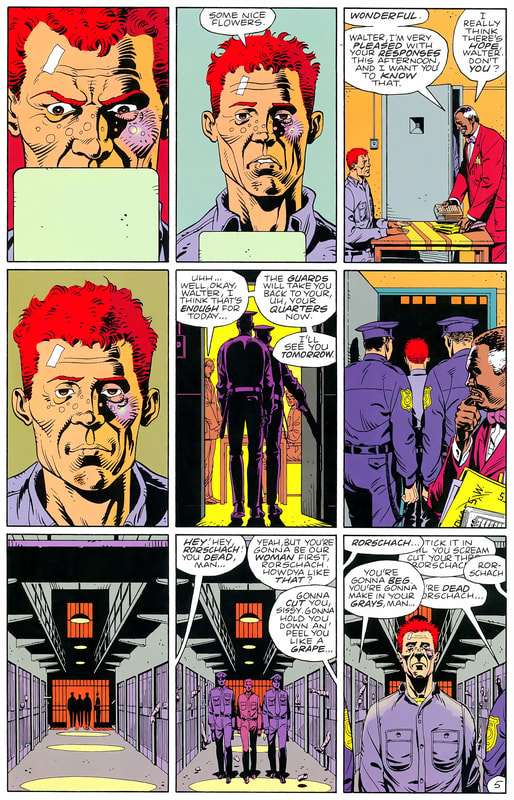
Moore, A. and Gibbons, D. (1986) Watchmen. New York: DC Comics, Issue, #6.
|

Moore, A. and Gibbons, D. (1986) Watchmen. New York: DC Comics, Issue, #4
|

Moore, A. and Gibbons, D. (1986) Watchmen. New York: DC Comics, Issue #2
|
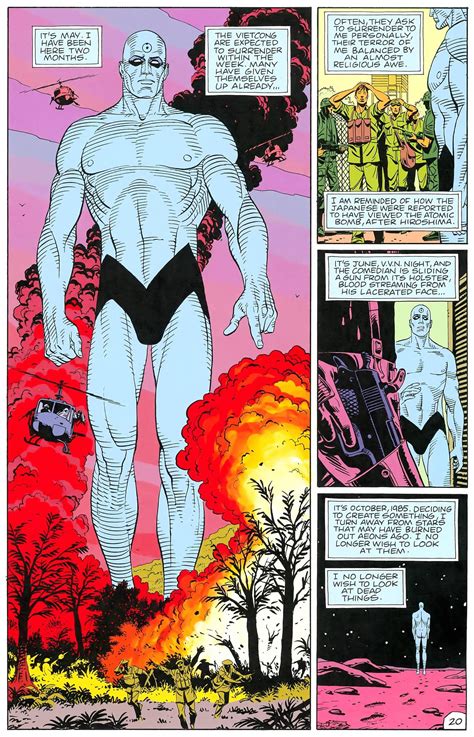
Moore, A. and Gibbons, D. (1986) Watchmen. New York: DC Comics, Issue, #7
|
Possible info sources
|
|
- Contrast with Chaos – When the grid is broken (e.g., during action sequences or moments of emotional intensity), it amplifies the impact of those moments.
- Homage to Classic Comics – The 9-panel grid is reminiscent of Golden and Silver Age comics, reinforcing Watchmen’s dialogue with traditional superhero storytelling while deconstructing it.
- Cinematic Influence – The layout mimics the storyboarding of films, creating a sense of precise framing and movement similar to film editing.
Watchmen’s Fearful Symmetry: (almost) frame by frame
- Mirrored Page Layouts:
- Each page in this chapter is designed to have a corresponding mirrored page. Specifically, the first page mirrors the last (28th), the second mirrors the 27th, and so forth. This deliberate structuring creates a reflective symmetry throughout the chapter.
- Central Symmetrical Spread:
- The midpoint of the chapter features a central spread that serves as the axis of symmetry. Pages 14 and 15 depict an assassination attempt on Adrian Veidt (Ozymandias), with the layout and imagery crafted to reflect each other, emphasizing the chapter's symmetrical theme.
- Thematic Resonance with Rorschach:
- The chapter's title, "Fearful Symmetry," not only references the structural design but also relates to the character Rorschach. His inkblot mask, which displays symmetrical patterns, symbolizes the duality and mirrored aspects explored in the narrative.
- Allusion to William Blake's "The Tyger":
- The title "Fearful Symmetry" is a direct reference to William Blake's poem "The Tyger," which contemplates the paradoxical nature of beauty and terror. This allusion adds a layer of literary depth to the chapter, aligning with its exploration of dualities.
Resource - Take the techniques that make it a masterwork and use them for changing the world.
- Deviation from Conventional Layouts:
- Unlike many American comics that employ irregular panel shapes for dramatic emphasis, Watchmen adheres to a strict nine-panel grid, foregoing techniques like trapezoidal panels or overlapping images. This choice creates a uniform and controlled visual structure.
- Unlike many American comics that employ irregular panel shapes for dramatic emphasis, Watchmen adheres to a strict nine-panel grid, foregoing techniques like trapezoidal panels or overlapping images. This choice creates a uniform and controlled visual structure.
- Increased Panel Density:
- The nine-panel grid results in a higher number of panels per page. For instance, the first issue of Watchmen averages 7.5 panels per page, compared to 5.7 in Moore and Gibbons' "For The Man Who Has Everything" and 4.7 in Swamp Thing #52. This density allows for more detailed storytelling within the same physical space.
- The nine-panel grid results in a higher number of panels per page. For instance, the first issue of Watchmen averages 7.5 panels per page, compared to 5.7 in Moore and Gibbons' "For The Man Who Has Everything" and 4.7 in Swamp Thing #52. This density allows for more detailed storytelling within the same physical space.
- Artist Compatibility:
- Dave Gibbons' precise and detailed line work complements the nine-panel grid. His style emphasizes clarity over dynamic motion, making him well-suited for the structured layout of Watchmen.
- Dave Gibbons' precise and detailed line work complements the nine-panel grid. His style emphasizes clarity over dynamic motion, making him well-suited for the structured layout of Watchmen.
- Impact on Narrative Pacing:
- The consistent use of the nine-panel grid establishes a steady rhythm, influencing how readers experience the story's pacing and timing. This uniformity contrasts with the more variable layouts of other comics, offering a unique storytelling approach.
- The consistent use of the nine-panel grid establishes a steady rhythm, influencing how readers experience the story's pacing and timing. This uniformity contrasts with the more variable layouts of other comics, offering a unique storytelling approach.
- Historical Context and Innovation:
- The article situates Watchmen within the broader history of comics, noting how its formalism and use of the nine-panel grid marked a departure from prevailing trends, contributing to its status as a groundbreaking work in the superhero genre.
- The article situates Watchmen within the broader history of comics, noting how its formalism and use of the nine-panel grid marked a departure from prevailing trends, contributing to its status as a groundbreaking work in the superhero genre.
I have since found more academic papers that relate to the given questions I will need to answer.
Session eight - Global culture & ethical design
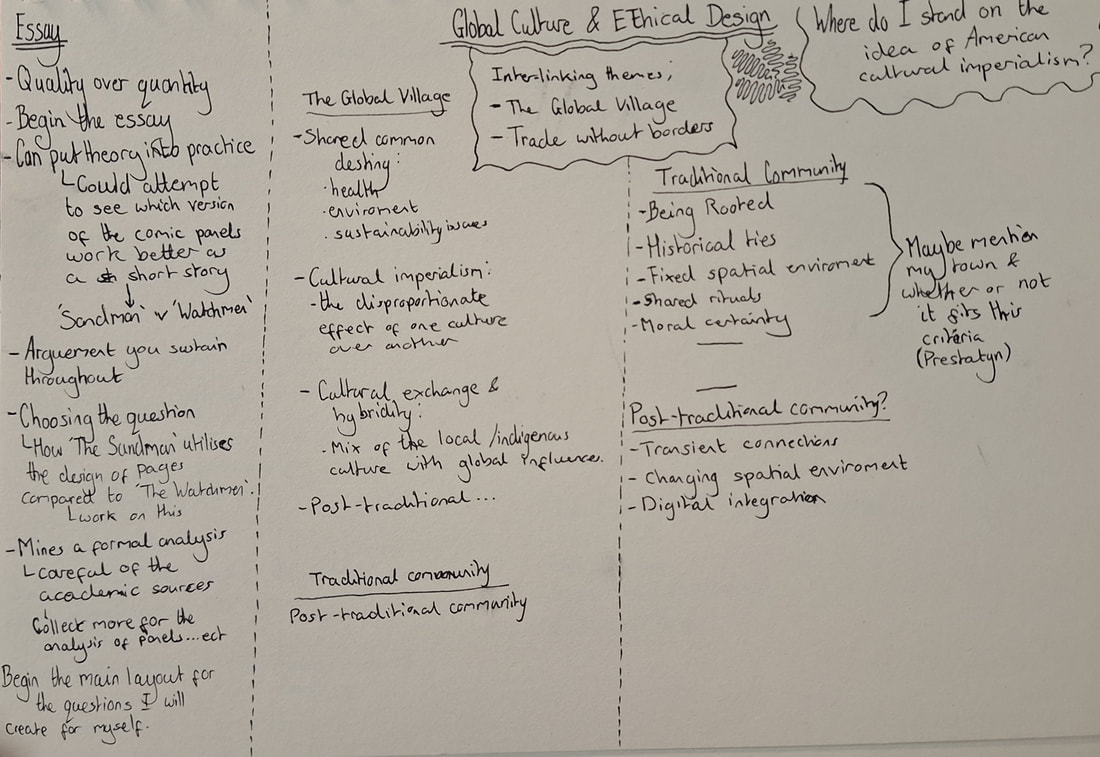
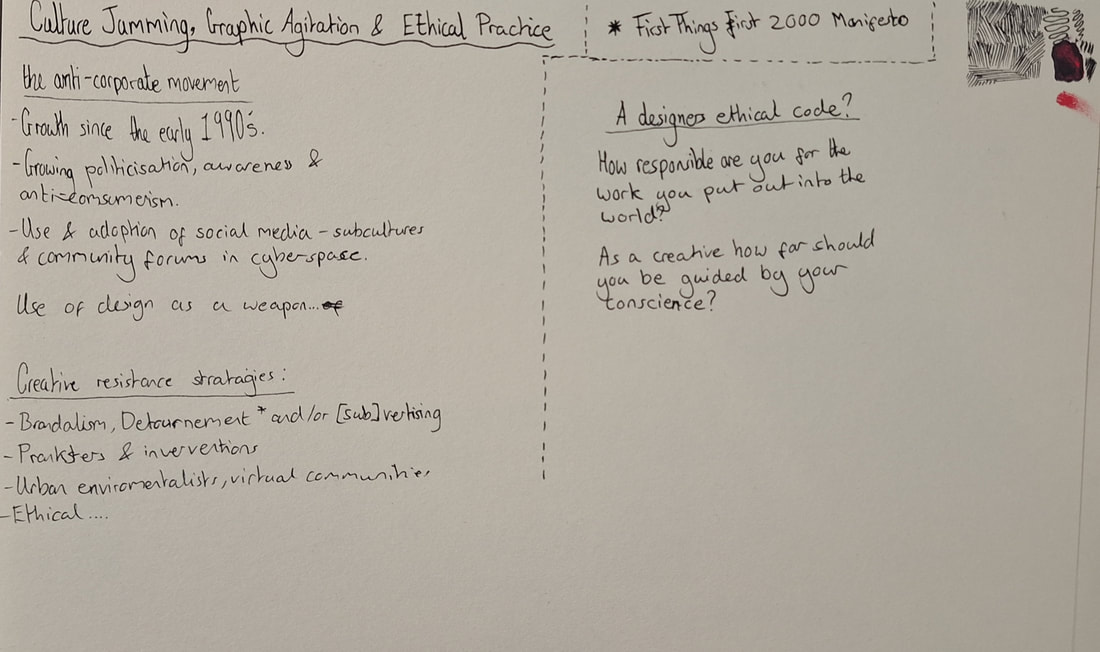
Notes taken during lecture
|

|
|
session eight blog task
Between the tasks we were given I chose to write a personal manifesto of my own focusing on values which I consider most valuable, kindness, self-respect and creativity.
It demonstrates the ideal that empathy is to be the leading factor in one humanity and actions whilst setting boundaries against cruelty or disrespect. My manifesto encourages honesty, emotional fortitude and the refusal to compromise your softness and morals when faced with pressure.
It demonstrates the ideal that empathy is to be the leading factor in one humanity and actions whilst setting boundaries against cruelty or disrespect. My manifesto encourages honesty, emotional fortitude and the refusal to compromise your softness and morals when faced with pressure.
My Personal manifesto
|
I would choose kindness every time, Not because I am weak, but because I am strong enough to keep my anger down.
Between kindness and cruelty, there is clarity and intention, what changes is what you let control you I refuse to accept harshness masquerading as integrity, Or conceit posing as arrogance, I will allow neither to rule me because there is no justification for either. I create to understand the world around me and to understand myself, a personal truth, My creativity is to try and make the world seem a little nicer each day, a personal meaning. I accept what makes me different. I will not abide by what is expected of me by society, I will not silence myself in my beliefs to make others happy, Respect is mutual. If not shared, I walk away. |
I believe that those who are gentle balance out those who are loud,
Both are necessary, but balance more so. I believe in boundaries, for safety and comfort And exceeding expectations, for joy and self-growth. I refuse to let harshness overshadow my compassion, But I refuse to let my compassion cause further pain for others when they need steady guidance. I will speak with care, I will speak with strength. I will protect the peace of those around me. I will honour my empathy I will give love to those who are in need of it. |
Extended essay
idea for my extended essay
"The indomitable human spirit shown through video games"
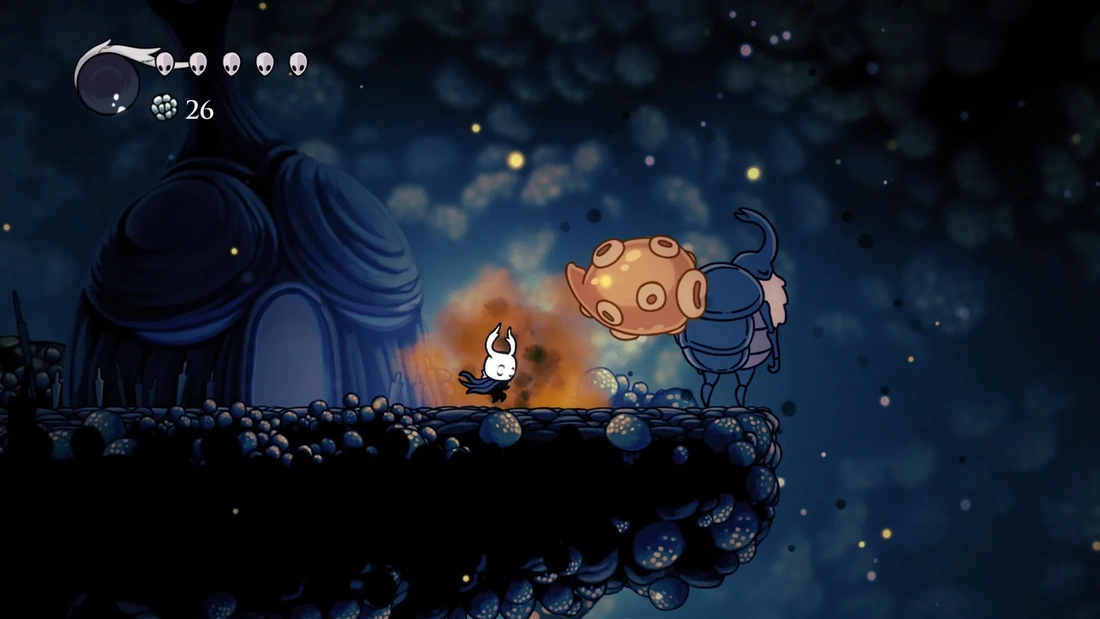
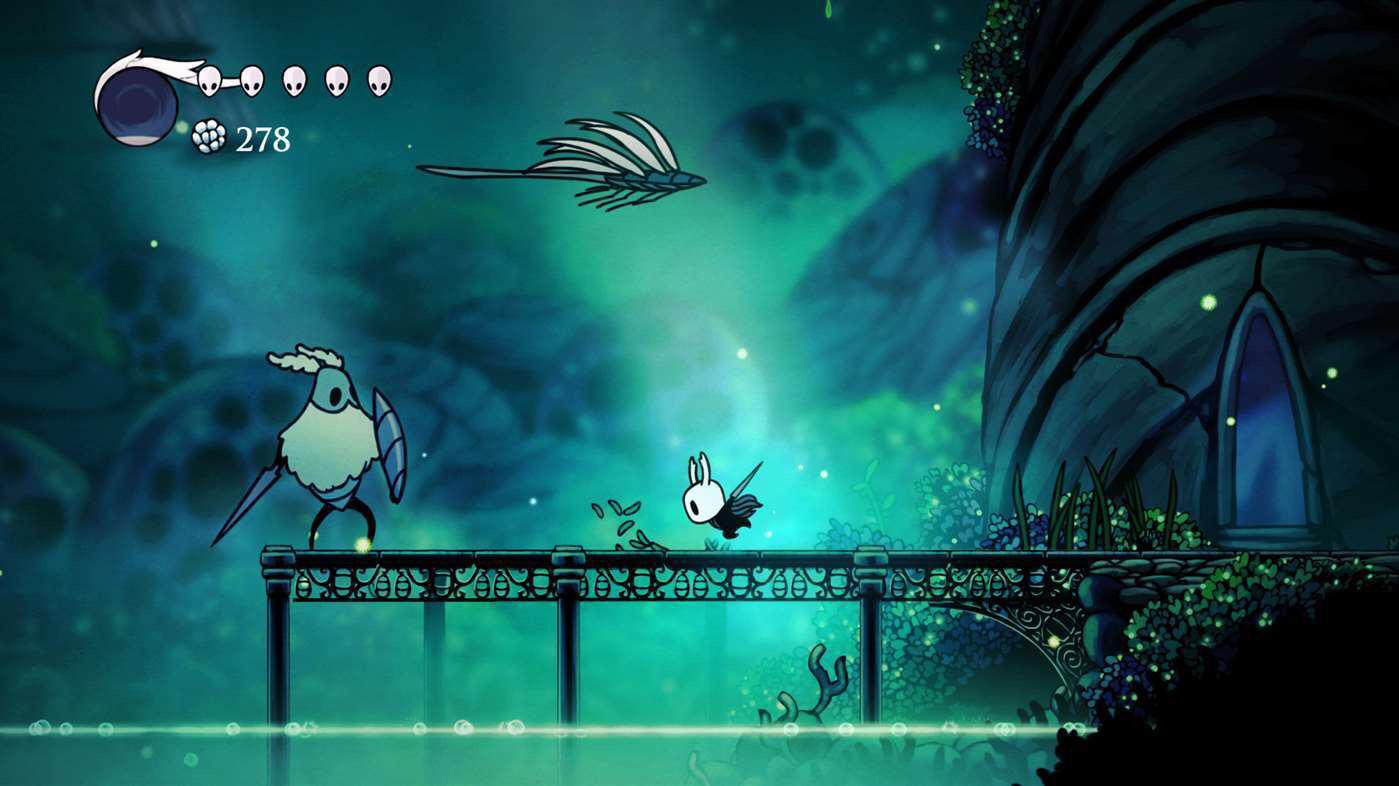
Video games are a unique medium for exploring the indomitable human spirit, blending interactive challenge with emotional storytelling. Titles like Undertale and Hollow Knight stand out because they don't just tell stories of perseverance, they make players live them. In Undertale, players confront moral dilemmas and are given real agency to choose compassion over violence, reinforcing themes of hope, forgiveness, and determination. Hollow Knight, on the other hand, places the player in a haunting, crumbling world where persistence, exploration, and quiet resilience are the only ways forward. Both games present overwhelming odds, isolation, and loss, yet they reward patience, kindness, and grit. When writing about this, it would be powerful to focus on how gameplay mechanics (like permadeath, choice systems, or gruelling boss fights) mirror emotional struggles, and how player experiences reflect broader themes of human resilience. Other games like Celeste (which tackles anxiety and self-doubt head-on) or Dark Souls (famous for its difficulty and "try again" ethos) could also deepen the discussion, showing how interactive challenges uniquely allow players to embody hope, courage, and perseverance first-hand, rather than just observing it.
I thought it would be more personal with my likes, ensuring that I wouldn't get bored easily of the topic and these are both games I am familiar and fond of. Undertale I have played since it's release in 2015 and Hollow knight more recently.
Possible ideas for research and topics
-Keep a reflective journal and document my thoughts, emotions and moral dilemmas as I play through the games I choose.
-Conduct player interviews about moments in the games, (that they are familiar with, could be done through a survey through reddit forums) where they felt inspired, emotionally moved, or made a choice that reflects inner strength.
-Write a short fictional short story inspired by the game themes, more personal composing a narrative that reflects the core ideas of the indomitable spirit that are explored in these games.
-Compare how different genres or platforms express the indomitable spirit.
-Ethical and Philosophical frameworks, how do the game test moral strength? do they reward utilitarian vs deontological choices?
-Analyse how players interpret or emotionally respond to these games.
-Development context (creators intent) - research developers statements.
resilience theory, flow, trauma and recovery, moral development in adolescence (why are they so powerful forms of medium for portraying the human spirit?)
-Historically when did the human spirit begin to show in video games?
Video games are a unique medium for exploring the indomitable human spirit, blending interactive challenge with emotional storytelling. Titles like Undertale and Hollow Knight stand out because they don't just tell stories of perseverance, they make players live them. In Undertale, players confront moral dilemmas and are given real agency to choose compassion over violence, reinforcing themes of hope, forgiveness, and determination. Hollow Knight, on the other hand, places the player in a haunting, crumbling world where persistence, exploration, and quiet resilience are the only ways forward. Both games present overwhelming odds, isolation, and loss, yet they reward patience, kindness, and grit. When writing about this, it would be powerful to focus on how gameplay mechanics (like permadeath, choice systems, or gruelling boss fights) mirror emotional struggles, and how player experiences reflect broader themes of human resilience. Other games like Celeste (which tackles anxiety and self-doubt head-on) or Dark Souls (famous for its difficulty and "try again" ethos) could also deepen the discussion, showing how interactive challenges uniquely allow players to embody hope, courage, and perseverance first-hand, rather than just observing it.
I thought it would be more personal with my likes, ensuring that I wouldn't get bored easily of the topic and these are both games I am familiar and fond of. Undertale I have played since it's release in 2015 and Hollow knight more recently.
Possible ideas for research and topics
-Keep a reflective journal and document my thoughts, emotions and moral dilemmas as I play through the games I choose.
-Conduct player interviews about moments in the games, (that they are familiar with, could be done through a survey through reddit forums) where they felt inspired, emotionally moved, or made a choice that reflects inner strength.
-Write a short fictional short story inspired by the game themes, more personal composing a narrative that reflects the core ideas of the indomitable spirit that are explored in these games.
-Compare how different genres or platforms express the indomitable spirit.
-Ethical and Philosophical frameworks, how do the game test moral strength? do they reward utilitarian vs deontological choices?
-Analyse how players interpret or emotionally respond to these games.
-Development context (creators intent) - research developers statements.
resilience theory, flow, trauma and recovery, moral development in adolescence (why are they so powerful forms of medium for portraying the human spirit?)
-Historically when did the human spirit begin to show in video games?

|

|
|
|
generating title ideas
'Determination and spirit: The indomitable spirit displayed through games such as Undertale and Hollow Knight.'
'Persistence through pixels: The indomitable spirit displayed through games such as Undertale and Hollow Knight.'
'Persistence through pixels: The indomitable spirit displayed through games such as Undertale and Hollow Knight.'